Virtual Time and Global States of Distributed Systems
Why this paper matters
Friedemann Mattern’s 1985 paper “Virtual Time and Global States of Distributed Systems” introduced a fundamental rethinking of time in distributed systems that remains foundational to both theory and practice. At its core, the paper challenges the assumption that a global, linearly ordered clock is either necessary or desirable for reasoning about distributed computations. This was a radical departure from the synchronous system models prevalent in the 1970s and early 1980s, which assumed access to a shared global clock. Mattern argues that distributed systems, by their very nature, lack such a common time base, yet the need for temporal reasoning-such as determining causality between events or capturing consistent global states-persists.
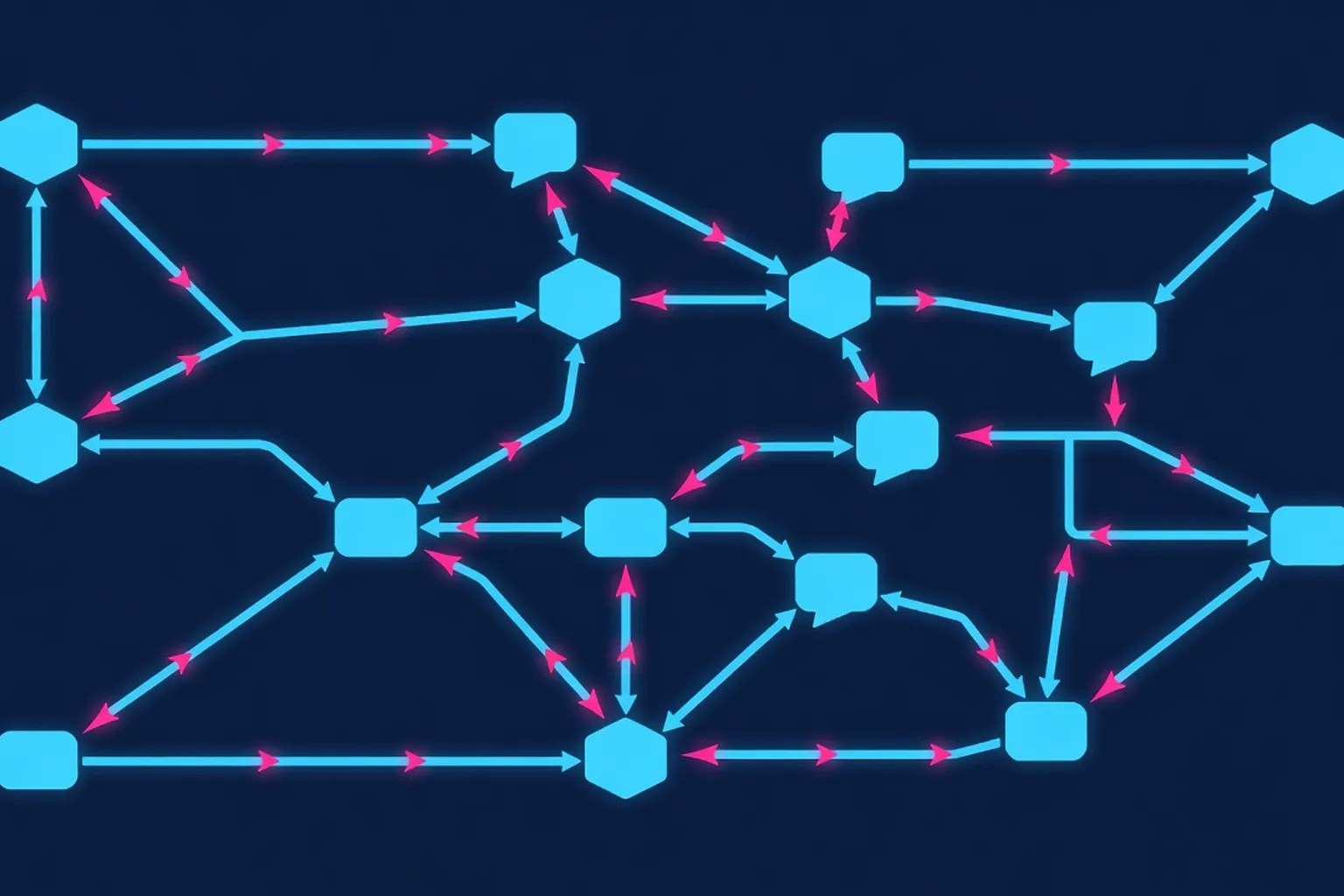
The paper’s central insight is to replace the notion of a single, global clock with a partially ordered model of virtual time, represented by vector timestamps. This is not merely an abstraction: it provides a practical mechanism to track causal relationships in message-passing systems where events occur concurrently and messages may be delayed or reordered. The vector clock model elegantly captures the “happens-before” relation defined by Leslie Lamport in 1978, but elevates it into a lattice structure that enables consistent snapshot computation even under asynchronous communication.
Historically, this work sits at the convergence of concurrency theory, fault tolerance, and distributed systems design. It prefigured later breakthroughs in consistency models, replication protocols, and database isolation semantics. By decoupling logical time from physical clocks, Mattern laid groundwork for eventual consistency, snapshot isolation, and conflict-free replicated data types (CRDTs), which are now cornerstones of scalable, distributed databases. In 2026, as systems scale to millions of nodes across continents and applications demand real-time analytics with global consistency, Mattern’s ideas remain more relevant than ever-no longer just in theory, but embedded in the engines of modern databases and consensus protocols.
Mattern’s work also intersects with foundational questions in physics and metaphysics. His relativistic analogy between distributed time and Minkowski spacetime suggests that causality, not simultaneity, is the fundamental observable in both domains. This perspective has influenced later work on distributed debugging and temporal logic, where the absence of a global clock is not a limitation but a feature-it mirrors the way spacetime itself lacks a privileged frame of reference. The paper’s enduring relevance is a testament to its depth: it is not only a technical contribution but a philosophical one, reshaping how we conceptualize order in systems without shared clocks.
Key contributions
- Introduced vector clocks as a mechanism to capture causal relationships in distributed systems, extending Lamport’s scalar logical clocks to n-dimensional vectors.
- Developed a lattice-theoretic model of virtual time, showing how partially ordered timestamps form a mathematical structure isomorphic to the causality relation.
- Formulated the global snapshot problem in asynchronous systems and provided an algorithm to compute a consistent global state despite message reordering.
- Demonstrated that causality can be tracked and visualized using vector timestamps, enabling applications in debugging, concurrency control, and replication.
- Established a relativistic analogy between distributed time and Minkowski spacetime, offering a deep theoretical connection between physics and distributed computing.
- Proved that consistent snapshots can be computed without global coordination, reducing synchronization overhead in large-scale systems.
Impact on modern systems
This trajectory continues in the annotated pivot of Amazon’s Dynamo on this site.
Mattern’s vector clock model has left a deep imprint on modern distributed databases and consensus systems, particularly in how they handle causality, consistency, and state capture at scale.
In FoundationDB, the vector clock concept underpins its transactional layer. FoundationDB uses a combination of logical clocks and vector-like metadata to track causal dependencies across shards, enabling serializable ACID transactions even in the presence of network partitions. This design choice allows FoundationDB to maintain linearizability across geographically distributed regions without requiring a single global clock. Notably, the system uses version vectors-a generalization of vector clocks-to detect conflicts and resolve them during recovery, directly echoing Mattern’s insight that partial order is sufficient to reason about consistency. This approach has helped FoundationDB achieve sub-millisecond latency at global scale since its 2018 public release.
Similarly, CockroachDB, a distributed SQL database inspired by Google Spanner, employs hybrid logical clocks (HLC) to bridge physical time with logical causality. HLC combines physical timestamps with Lamport-style counters to simulate a global clock while preserving causal ordering. Though not vector clocks per se, HLC inherits the same spirit: it ensures that if event A causally precedes event B, then A’s timestamp is less than B’s. This prevents anomalies in distributed SQL queries and enables consistent reads across regions. CockroachDB’s 2021 introduction of follower reads-allowing stale but causally consistent reads from replicas-relies directly on this temporal model, reducing latency by 50% in cross-Atlantic deployments without sacrificing correctness.
Beyond databases, Mattern’s ideas resonate in CRDTs and eventual consistency frameworks. Systems like Riak and Redis modules for CRDTs use vector clocks or version vectors to merge concurrent updates deterministically. This ensures that even if two clients update the same key on different nodes without coordination, the final state reflects a consistent merge based on causal history-a direct application of Mattern’s lattice model.
Even Apache Kafka, originally designed for log-based messaging, now incorporates transactional semantics using producer IDs and sequence numbers that function as logical clocks. While not vector clocks, the underlying principle of tracking causal dependencies across distributed logs aligns with Mattern’s thesis: time is a logical construct, not a physical one.
Finally, Mattern’s global snapshot algorithm has influenced distributed tracing systems such as Jaeger and OpenTelemetry. These systems use vector timestamps to reconstruct the causal flow of requests across microservices, enabling developers to debug complex, asynchronous workflows-a practical realization of the “consistent global state” Mattern sought to compute.
In cloud-native platforms like Kubernetes, vector clocks and version vectors are used in etcd-the system’s backing store-to manage cluster state. Etcd’s use of lease-based leases and revision numbers implicitly tracks causality across distributed API calls. When a pod is scheduled or a config is updated, the system ensures that later operations observe prior state changes in the correct order, avoiding split-brain scenarios. This temporal coordination is invisible to users but critical to the system’s reliability, and it owes much to Mattern’s foundational work.
Another compelling example is FaunaDB, a serverless document-relational database that uses temporal document versions to support point-in-time queries and auditing. Each document carries a metadata version vector that records the causal history of its updates. This enables features like “time travel” queries, where users can reconstruct the state of their data at any point in the past. FaunaDB’s 2022 introduction of multi-region temporal queries extended this to global applications, allowing developers to query data as it existed at a specific logical time across regions-precisely the kind of global snapshot computation Mattern envisioned.
In short, Mattern’s paper is not an artifact of the 1980s: it is a living blueprint for reasoning about time and state in systems where nodes are separated by oceans and messages by milliseconds.
AI era: how LLMs and vector databases relate to this paper
As large language models (LLMs) and AI agents permeate production systems, the challenges of state management, causality tracking, and consistent reasoning across distributed components have resurfaced-this time with semantic depth and real-time demands. Mattern’s work on vector clocks and virtual time offers a powerful lens to understand and optimize modern AI architectures, particularly those involving vector databases, RAG pipelines, and multi-agent systems.
Vector databases like Pinecone, Weaviate, Qdrant, and Milvus store high-dimensional embeddings-representations of meaning that evolve over time as data changes. But these databases operate in distributed settings where updates from multiple sources (e.g., real-time user feedback, model fine-tuning, or data ingestion) arrive out of order. To maintain consistency and avoid stale or contradictory retrievals, systems need to track when and why an embedding was updated. This is where vector clocks shine. By annotating embeddings with vector timestamps, a vector database can ensure that queries retrieve vectors that are causally consistent with the agent’s current knowledge state. For example, if an agent updates a user profile embedding based on a new interaction, subsequent retrievals should reflect that update only after it has been durably committed-a property guaranteed by a vector clock ordering.
In Retrieval-Augmented Generation (RAG), agents perform multiple steps: retrieve relevant documents, generate answers, and potentially update memory or external tools. Each step is an event in a distributed computation. Without a notion of time or causality, an agent might retrieve an outdated document version or overwrite a newer one with stale data. Vector databases with built-in version vectors (a Mattern-style construct) can prevent this. Tools like pgvector (PostgreSQL’s vector extension) are beginning to support row-level versioning and temporal queries, enabling AI agents to query the database “as it was known at time T,” effectively reconstructing the semantic state of their context.
LLM inference itself is a distributed process when agents collaborate or when systems use model parallelism across GPUs or regions. Each token generation, tool invocation, and retrieval step can be timestamped using logical clocks. This enables causal tracing of AI decisions-critical for auditability and debugging in regulated industries. Tools like LangSmith and Phoenix are beginning to integrate such temporal metadata, aligning with Mattern’s vision of a computable global state.
Semantic indexes-collections of embeddings that represent knowledge graphs or document corpora-are updated continuously. To avoid hallucinations from outdated or conflicting embeddings, multi-agent systems require a causal consistency model. This is where AI agent state stores (e.g., in LangChain or CrewAI) are evolving to include vector clocks or version vectors to track the provenance of each piece of retrieved or generated knowledge. When an agent updates its memory, it does so with a timestamp that reflects its entire prior context-mirroring Mattern’s global snapshot algorithm, but applied to meaning rather than bytes.
In LLM-driven query planning for databases, agents decompose complex SQL or NoSQL queries into subqueries. The planner must respect dependencies: a subquery that depends on a previous write must not execute until that write is visible. This is a distributed control flow problem where Mattern’s partial-order time model provides a formal foundation. Systems like TiDB and YugabyTE are exploring transactional agents that plan queries across regions, and their temporal coordination logic draws from the same principles Mattern articulated forty years ago.
A particularly innovative application appears in real-time collaboration tools like Notion AI or Google Docs with AI assistance. When multiple users or AI agents edit a shared document simultaneously, their changes must be merged in a way that respects causal order. Version vectors-implicitly inspired by Mattern’s work-are used to track which agent made which change and when, ensuring that concurrent edits do not overwrite each other inappropriately. This prevents the classic “last write wins” problem and enables true collaborative intelligence.
Another domain where Mattern’s ideas are reshaping AI is model serving at scale. Systems like vLLM and TensorRT-LLM manage thousands of concurrent inference requests across GPUs. To maintain consistency in batch processing and avoid stale model weights being used in generation, these systems use logical clocks to order model updates and inference steps. This ensures that a user’s query is processed against the correct version of the model, even when the model is being fine-tuned or updated in real time.
In 2026, as AI agents coordinate across clouds, devices, and organizations, the need to reason about when knowledge was valid and what caused it to change is not just academic-it’s operational. Mattern’s vector time is no longer a theoretical curiosity; it is the silent engine behind trustworthy, coherent AI systems.
Further reading
- Virtual Synchrony Replication Model
- The Byzantine Generals Problem
- Timestamps in Message-Passing Systems That Preserve the Partial Ordering
- Lamport Clocks and Logical Time (original Lamport paper)
- Conflict-Free Replicated Data Types (CRDTs) by Shapiro et al.
- CAP Theorem and its implications for distributed systems’