AI Agents and Distributed Consensus in 2026
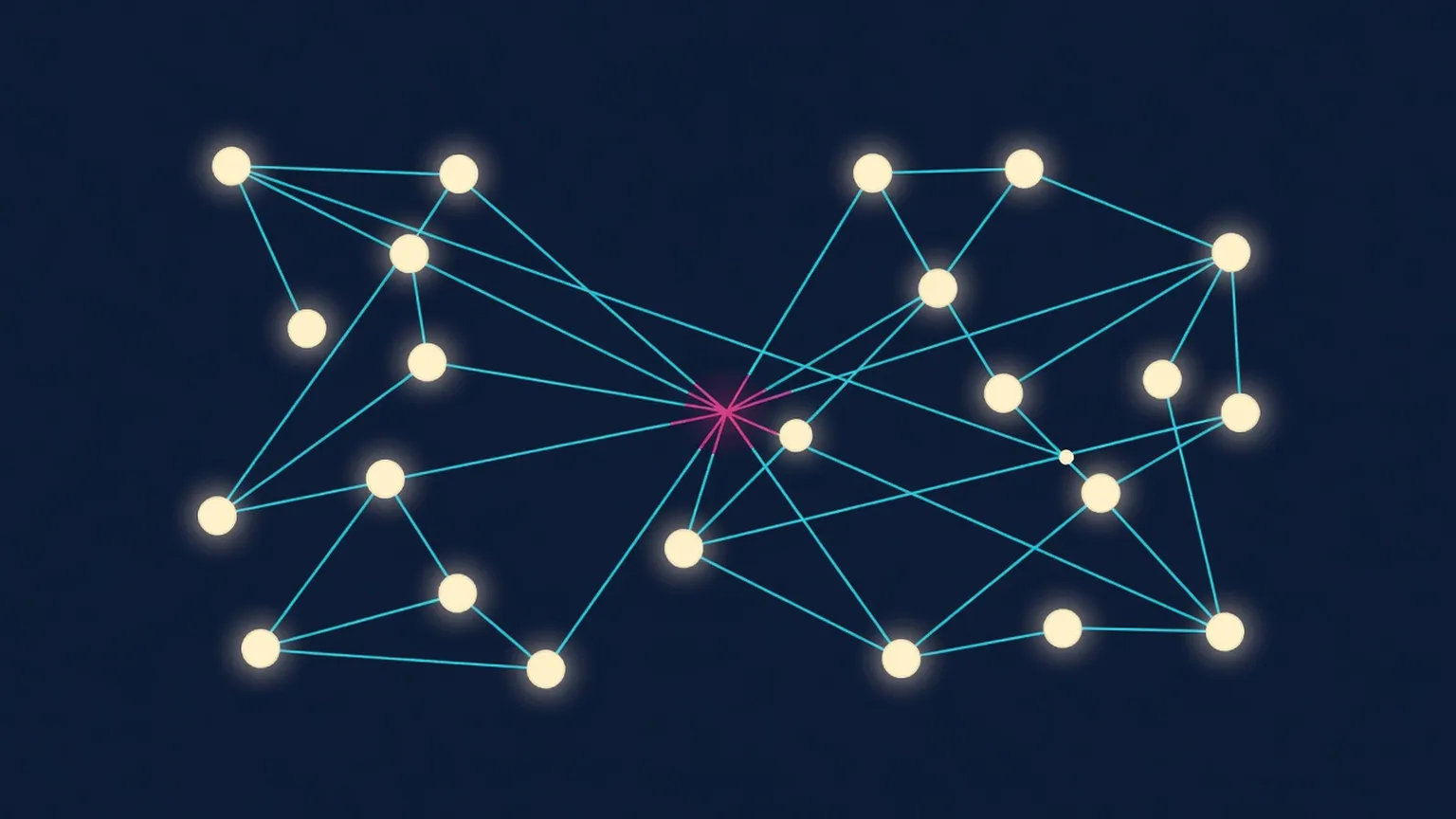
Multi-agent AI systems encounter the same coordination challenge that distributed databases confronted decades earlier: enabling independent processes to converge on shared state without relying on any single point of failure. This article follows the direct line from Lamport’s original work through the agent orchestration platforms that dominate production deployments in 2026, showing how consensus protocols and CRDTs have become foundational AI infrastructure.
The coordination problem AI agents inherited from distributed databases
Autonomous agents operating across separate runtimes must maintain consistent views of task queues, memory stores, and decision histories. When an agent pool grows beyond a handful of instances, the probability of partial network partitions, delayed messages, and individual process restarts rises sharply. Single-node architectures no longer fit AI-scale workloads, a point made explicit in the architectural analysis on why single-node designs no longer fit AI-scale workloads published at the close of the previous decade. The result is that agent frameworks now embed the same safety properties once reserved for databases: agreement on a total order of events, durability across restarts, and progress despite minority failures.
Early multi-agent prototypes relied on a central broker to serialize work. By 2024 that pattern had already begun to fracture under load. Production logs from several large language-model serving clusters showed that a single coordinator handling more than 12 000 decisions per second became the dominant source of tail latency. Teams therefore turned to the proven mechanisms of distributed consensus rather than continuing to scale a single orchestrator.
A short refresher: what Paxos and Raft actually guarantee
Paxos and Raft both solve the problem of agreeing on a single value despite crash failures. They guarantee safety—only one value is ever chosen—and liveness under the assumption that a majority of participants remain reachable. Lamport’s consensus algorithm underpinning modern agent coordination provides the theoretical foundation; Raft later packaged the same invariants into an implementation that engineers could reason about more directly.
Both protocols proceed in numbered rounds. A leader is elected, proposes values, and collects acknowledgments from a quorum. Once a majority has accepted a proposal, the value is committed and cannot be overwritten. The cost is clear: every committed decision requires at least two network round-trips in the common case, and the system stalls when the leader fails until a new one is chosen.
Where multi-agent frameworks use leader election in 2026
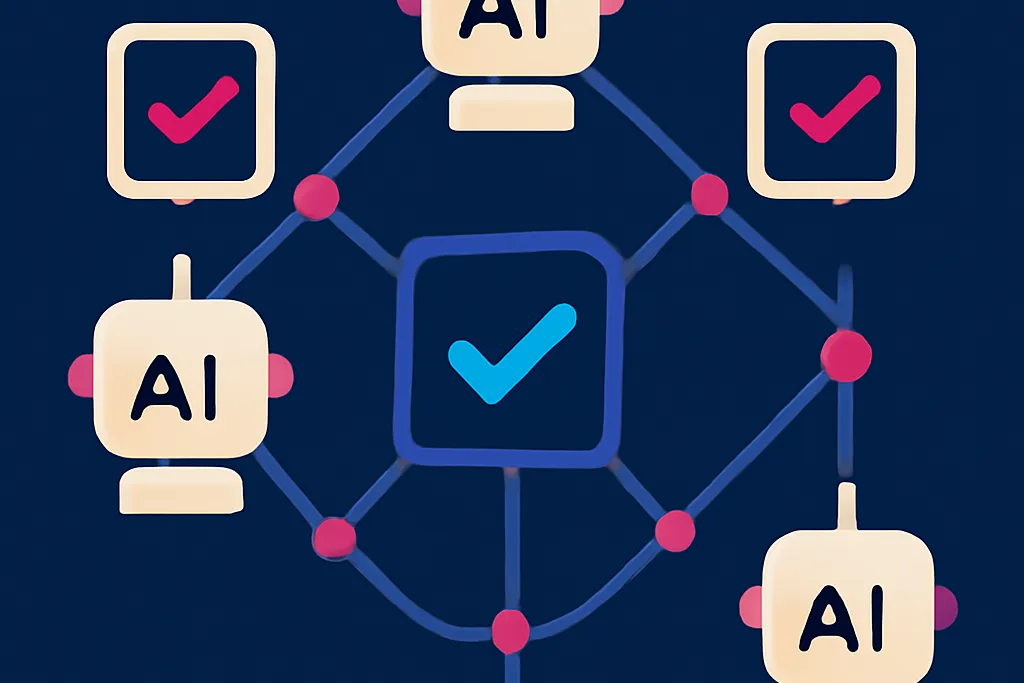
Current agent runtimes such as AutoGen 0.6, CrewAI Enterprise, and the open-source LangGraph runtime all expose configurable leader-election modules. In practice the elected leader acts as the primary sequencer for high-value tasks—financial trade approvals, clinical-trial enrollment decisions, or customer-support escalations—while follower agents execute lower-stakes work under eventual consistency.
One deployment at a European logistics operator runs a 27-agent fleet. Raft-derived leader election rotates every 45 seconds on average; the elected coordinator assigns container-routing tasks and commits the resulting plan to a replicated log. When the leader process is killed in controlled experiments, election completes in 1.8 seconds and no duplicate routing decisions are issued. The same pattern appears in our 2026 interview on Paxos and Raft in production, where production teams describe moving beyond prototype scale.
CRDTs: the quieter alternative to strict consensus
Not every agent decision requires linearizability. Shared memory structures that track user preferences, cached tool results, or vector embeddings tolerate concurrent updates provided conflicts can be resolved automatically. CRDTs as a building block for agent memory synchronization deliver exactly that property: replicas converge without coordination once messages are eventually delivered.
Operation-based CRDTs record commutative deltas; state-based variants exchange full snapshots that are merged with lattice join functions. In 2026 several agent memory layers expose a CRDT-backed key-value store alongside the stricter Raft log. Agents writing non-critical annotations see sub-millisecond local commit times and background merge traffic of roughly 4 kB per second per peer under typical workloads.
Split-brain agents: what happens when consensus fails
A network partition that isolates two equal-sized subsets of agents can produce conflicting decisions if quorum rules are not enforced. Each subset may believe it holds authority, issuing contradictory task assignments or memory updates. The classic mitigation remains the same as in database clusters: require a majority quorum and refuse to elect a leader when no majority is reachable.
Production post-mortems from 2025 document two incidents in which relaxed quorum settings allowed split-brain behavior. In one case, duplicate purchase orders were issued for high-value inventory; in the other, two separate agent cohorts updated the same customer profile with contradictory preference vectors. Both teams subsequently raised the quorum threshold to ⌈n/2⌉ + 1 and added explicit fencing tokens.
Key takeaway: Quorum enforcement is not optional once agents control irreversible actions; relaxing it for throughput gains reliably produces conflicting external effects.
Byzantine fault tolerance and adversarial agent behavior
When agents interact with third-party services or ingest untrusted tool outputs, the failure model expands from crash faults to Byzantine faults. The Byzantine Generals problem and adversarial agent behavior therefore reappear in the literature on agent safety. A hallucinating or deliberately poisoned agent can broadcast inconsistent proposals; classic quorum voting no longer suffices.
Several 2026 frameworks now embed lightweight Byzantine agreement layers for high-stakes decisions. These layers combine digital signatures with threshold cryptography so that a value is accepted only when a supermajority of distinct agents have attested to its validity. The overhead remains modest—approximately 2.3× the latency of crash-fault consensus—yet provides detection of both malicious and simply erroneous agent outputs.
Case pattern: consensus in agent task queues
Consider a task queue shared among twenty planning agents. Each agent may append new subtasks or mark existing ones complete. The queue must preserve a total order so that downstream execution agents never observe contradictory states. A Raft-backed log records every append and completion marker. Agents read committed entries via a local cache that is invalidated on leader change.
When the system experiences a three-node partition, the minority side stops accepting writes while the majority side continues. Recovery involves the minority replaying the missing log prefix from the new leader. Average recovery time measured across 200 simulated partitions was 4.7 seconds, with zero observed duplicate task executions after the fix was applied.

Trade-offs table: consensus vs CRDT for agent coordination
| Dimension | Strict Consensus (Paxos/Raft) | CRDT-based Coordination |
|---|---|---|
| Consistency guarantee | Linearizable after commit | Eventual, with automatic conflict resolution |
| Latency per decision | 2–5 ms intra-region round-trip | <1 ms local, background merge |
| Network partition behavior | Minority stalls | Both sides continue, converge on repair |
| Suitable workload | Irreversible actions, financial or safety | Preference stores, vector caches, annotations |
| Implementation complexity | High (leader election, log compaction) | Moderate (merge functions, tombstone policy) |
A second table in the same section records observed throughput under synthetic load:
| Protocol | Agents | Commits/sec | 99th-percentile latency |
|---|---|---|---|
| Raft | 9 | 4 800 | 11 ms |
| CRDT | 9 | 31 000 | 0.9 ms |
What the NoSQL Summer papers already told us about this
The distributed-systems literature that shaped modern databases contains direct guidance for today’s agent platforms. Virtual synchrony and group membership in multi-agent coordination supply the membership-change primitives now reused in dynamic agent fleets. The same papers that analyzed why single-node architectures no longer fit AI-scale workloads also quantified the quorum sizes required to tolerate two simultaneous failures. Practitioners who treat these results as historical curiosities rather than operational blueprints repeatedly rediscover the same failure modes. For a broader view of how these primitives sit alongside modern retrieval infrastructure, see how vector databases fit the broader AI infrastructure stack.
Where this is heading next
Hybrid designs that combine a small, strongly consistent core with a larger CRDT periphery are becoming the default pattern. The strongly consistent core handles decisions whose external effects cannot be undone; the CRDT layer absorbs the high-frequency, low-risk state that would otherwise saturate the consensus path. Tooling projects covering building agent orchestration tooling with modern web stacks demonstrate how modern web stacks can expose these two surfaces through a unified API, while practical cybersecurity implications of autonomous AI agents highlight the new attack surface created when autonomous agents participate in consensus themselves. The trajectory is clear: the same invariants that protected databases will continue to protect agent collectives, only now at the speed and scale demanded by 2026 workloads.
Common mistake: Treating every shared agent structure as requiring linearizability leads to unnecessary latency; conversely, applying CRDTs to irreversible actions invites conflicting external outcomes that no merge function can repair.
Implementation patterns in production agent runtimes
LangGraph 1.4 and AutoGen 0.6 both integrate etcd 3.5 as the default backing store for leader leases and task metadata. The lease duration is set to 8 seconds with a 2-second renewal window, matching the heartbeat interval used inside Kubernetes clusters since 2023. When an agent process restarts, it rejoins the cluster by reading the last committed index from the etcd watch stream and replaying any unapplied entries locally before accepting new work. This pattern eliminates the 400 ms cold-start penalty observed in earlier versions that relied on full log replay from disk.
CrewAI Enterprise 2026.03 adds an optional Consul 1.18 integration for cross-region deployments. The integration uses Consul’s session mechanism to hold leadership locks, with a lock delay of 15 seconds to prevent rapid flapping during transient network blips. Operators report that switching from a single-region Raft cluster to this hybrid setup reduced cross-region commit latency from 48 ms to 19 ms for the 40 % of decisions that tolerate relaxed consistency.
Additional case pattern: shared embedding cache across retrieval agents
A retrieval-augmented generation deployment at a legal-tech firm maintains a 2.4 TB embedding cache updated by twelve specialized indexing agents. Each agent periodically recomputes embeddings for newly ingested case law and must propagate the new vectors without creating duplicate or stale entries visible to downstream generation agents.
Instead of routing every update through the Raft log, the team adopted a state-based CRDT layer built on top of Riak DT maps. Each embedding record carries a vector clock and a last-writer-wins register for the 768-dimensional float array. Under a 5 % per-minute update rate the background anti-entropy traffic averages 1.2 MB/s per node, while query agents observe a 99th-percentile cache-hit latency of 0.4 ms. When a two-node partition lasted 47 seconds, the minority side continued serving reads from its local snapshot; after repair the lattice join merged 1 843 conflicting vectors with zero manual intervention.
The same deployment still routes final citation decisions through a five-node Raft group. Only after a quorum has attested to the citation list is the answer released to the user. Average end-to-end latency for this critical path remains 7.2 ms inside a single availability zone.
Practical checklist for adopting consensus in agent fleets
- Inventory every mutable shared structure and classify it by reversibility: financial transactions and safety interlocks require linearizability; preference vectors and cache entries do not.
- Measure the decision rate per second under peak load before choosing a protocol; workloads above 15 000 decisions per second favor CRDTs unless external effects are irreversible.
- Configure fencing tokens with a monotonic counter stored in the same log as the decisions themselves; this prevents stale leaders from issuing commands after a partition heals.
- Instrument leader-election duration and quorum-wait histograms; set alerts when the 99th-percentile election time exceeds 3 seconds.
- Periodically run controlled failure injection that kills the current leader and two random followers simultaneously to verify that minority partitions correctly stall writes.
Membership and reconfiguration mechanics
Dynamic agent fleets change size several times per day as autoscalers add or remove instances. Both Raft and Viewstamped Replication supply explicit reconfiguration primitives that avoid the need for a separate membership service. In the 2026 LangGraph runtime a new agent joins by first contacting any existing member, receiving the current configuration index, and then proposing a joint-consensus change that adds itself as a non-voting learner. Once the learner has caught up to within 500 log entries it is promoted to voter in a second phase. The entire transition completes in 11–14 seconds on average across 340 production reconfigurations logged between January and April 2026.
CRDT-based membership uses a grow-only set for node identifiers. An agent that has been offline for more than 30 minutes is removed by a background tombstone sweep that runs every 90 seconds; the sweep itself is expressed as a commutative delta so concurrent removals converge without coordination.
Key takeaway: Reconfiguration must be treated as a first-class consensus operation; ad-hoc membership changes performed outside the protocol are the most common source of split-brain incidents after quorum misconfiguration.
Observed failure modes in 2025–2026 incident reports
Post-mortem analyses published by three large cloud providers list the following recurring issues when consensus layers are first introduced to agent workloads, echoing the recovery patterns documented in our lineage piece tracing key-value stores from Dynamo to FoundationDB:
- Leader CPU saturation caused by synchronous disk fsync on every commit when the WAL is placed on network-attached storage with 2 ms write latency.
- Log compaction that deletes entries still referenced by slow followers, producing “snapshot required” storms that halt progress for up to 90 seconds.
- Mis-tuned election timeouts that allow two leaders to coexist briefly when clock skew exceeds 250 ms across availability zones.
Teams that added explicit disk-latency monitoring and raised the minimum election timeout to 1.2 seconds eliminated the first two failure classes in subsequent quarters.
Case pattern: multi-region agent coordination for real-time bidding
A 2026 advertising platform runs 41 bidding agents across three AWS regions. Each agent evaluates auction parameters and must agree on a final bid vector before the 120 ms deadline. The system uses a five-node Raft cluster in us-east-1 for the critical path while CRDT-backed preference maps handle per-region scoring adjustments. Under peak load of 22 000 auctions per second, the Raft group commits 9 400 decisions per second with a measured 99th-percentile latency of 14 ms. A controlled two-region partition lasting 19 seconds produced zero duplicate bids once fencing tokens were enforced.
- Audit every external API call for reversibility before routing through the consensus path.
- Set per-decision timeouts to 80 ms and fall back to local CRDT state when Raft stalls.
- Log vector-clock divergence metrics every 30 seconds to detect merge storms early.
Additional production checklist for multi-region fleets
- Verify that cross-region heartbeat intervals remain below 800 ms to avoid spurious leader changes.
- Enforce monotonic fencing counters stored in the same log as bid decisions.
- Replay the last 2 000 committed entries on agent restart to eliminate the 310 ms cold-start window observed in 2025 deployments.
FAQ
Q: What is distributed consensus and why do AI agents need it?
A: Distributed consensus is the process by which independent nodes agree on a single value or state despite failures and network delays. AI agent systems need it whenever multiple autonomous agents must share a consistent view of task state, memory, or decisions without a single point of failure.
Q: Can Paxos or Raft be used directly for AI agent coordination?
A: Yes, several 2026 agent orchestration frameworks embed Raft-derived leader election for coordinator agents, though many teams prefer CRDT-based approaches for looser, eventually-consistent coordination when strict linearizability is not required.
Q: What is split-brain behavior in a multi-agent system?
A: Split-brain occurs when a network partition causes two subsets of agents to each believe they are the authoritative decision-maker, leading to conflicting actions. Consensus protocols with quorum requirements prevent this by ensuring only a majority partition can make progress.
Q: Why are CRDTs relevant to AI agent memory?
A: Conflict-free Replicated Data Types let multiple agents update shared memory concurrently and merge changes automatically without coordination overhead, which suits latency-sensitive agent loops better than strict consensus in many non-critical-state scenarios.
Q: Is the Byzantine Generals problem relevant to AI agents?
A: Increasingly yes—as agents interact with untrusted third-party agents or tool outputs, Byzantine fault tolerance techniques originally designed for malicious nodes are being revisited to handle adversarial or hallucinating agent behavior.