Interview: Consensus in 2026 — Paxos and Raft Revisited

About Dr. Aiden Vasquez
Dr. Aiden Vasquez is a senior distributed-systems engineer with over 20 years of experience in building consensus systems. Formerly an engineer at a Spanner-like project, Dr. Vasquez is now the CTO of ConsensusLabs, where they focus on advancing the state of distributed consensus technologies. Dr. Vasquez has been a pivotal figure in implementing and improving consensus protocols, contributing to both academic and industrial advancements in the field. Their work has influenced the design of several large-scale systems, and they have been instrumental in integrating emerging technologies into consensus frameworks.
The Interview
Engineers comparing consensus implementations across stacks can read this alongside the Paxos Made Simple paper and the Raft consensus paper summary — the historical anchors that frame most modern designs.
Q: Dr. Vasquez, can you start by explaining the significance of Paxos in the history of consensus algorithms?
A: Paxos, introduced by Leslie Lamport in the late 1990s, was a groundbreaking solution to the consensus problem in distributed systems. It addressed the challenge of ensuring that a group of machines, or nodes, could agree on a single value even in the presence of failures. The original paper, “The Part-Time Parliament,” was quite complex, but Lamport later simplified it in “Paxos Made Simple” paxos-made-simple. Paxos is foundational because it was one of the first algorithms to provide a rigorous solution to consensus in asynchronous environments, building directly on the partial-order semantics first described in Timestamps in Message-Passing Systems that Preserve Partial Ordering. It has influenced numerous systems and inspired variants like Multi-Paxos and EPaxos, which aim to improve its limitations, such as its complexity and performance bottlenecks.
Real-world implementations of Paxos can be seen in systems like Google’s Chubby lock service and Microsoft’s Azure Cosmos DB, which rely on Paxos for ensuring data consistency across distributed nodes. In these environments, Paxos provides a way to manage configuration changes and coordinate distributed transactions, showing its versatility and foundational role in distributed systems. Chubby, for instance, uses Paxos to handle distributed locks, which are critical for maintaining consistency in Google’s infrastructure, supporting services like Google File System and Bigtable. In practice, Paxos allows these systems to achieve consensus with latencies typically under 20 milliseconds, even under failure conditions, proving its resilience and reliability.
Q: How does Raft compare to Paxos in terms of understandability and implementation?
A: Raft was introduced by Diego Ongaro and John Ousterhout in 2014 as an alternative to Paxos, with a focus on understandability. While Paxos is notoriously difficult to grasp due to its intricate proof and mechanics, Raft was designed to be more intuitive. It breaks down the consensus process into distinct phases like leader election, log replication, and safety, making it easier to reason about and implement. This clarity has led to Raft’s adoption in several modern distributed systems like etcd and Consul.
In practice, Raft has been implemented in high-profile systems such as HashiCorp’s Consul and Kubernetes’ etcd. These systems benefit from Raft’s clear leader election and log replication mechanisms, which facilitate scalability and reliability. For example, etcd uses Raft to maintain a consistent and highly available key-value store, which is crucial for managing configuration data across Kubernetes clusters. In Kubernetes, etcd stores critical metadata, enabling high availability and consistency even during cluster upgrades or failures. The adoption of Raft in such critical infrastructures underscores its advantages in real-world applications, including the ability to handle thousands of operations per second with low latency. Consul leverages Raft to manage service discovery and configuration, ensuring that changes in network topology or application state are consistently reflected across the entire system, often in mere seconds.
Q: What are the main challenges associated with Multi-Paxos and how does EPaxos address them?
A: Multi-Paxos extends Paxos to support a sequence of decisions, which is crucial for practical applications where multiple commands need consensus over time. However, it introduces challenges such as leader bottlenecks, where a single leader can become a point of contention, slowing down the system. EPaxos, introduced as an enhancement, addresses these issues by enabling more flexible leader roles and reducing dependencies between commands. This allows EPaxos to achieve higher throughput and better fault tolerance. By relaxing the strict leader-following paradigm, EPaxos can handle network partitions and failures more gracefully, making it a compelling choice for systems requiring high availability.
EPaxos, for example, has been implemented in systems that demand low latency and high throughput, such as online transaction processing (OLTP) databases. By allowing any replica to propose commands and reducing the need for a single leader to process all requests, EPaxos can more effectively utilize network resources and reduce latency. This makes it particularly well-suited for geographically distributed systems where network delays can be significant. In such environments, EPaxos can handle up to 50% more client requests per second compared to Multi-Paxos, demonstrating its efficiency in high-demand scenarios. For instance, in a distributed database spread across multiple continents, EPaxos can reduce latency by up to 40% compared to Multi-Paxos, providing a smooth user experience even when nodes are thousands of miles apart.
Q: Leader election is a critical component of consensus algorithms. How do modern systems handle it?
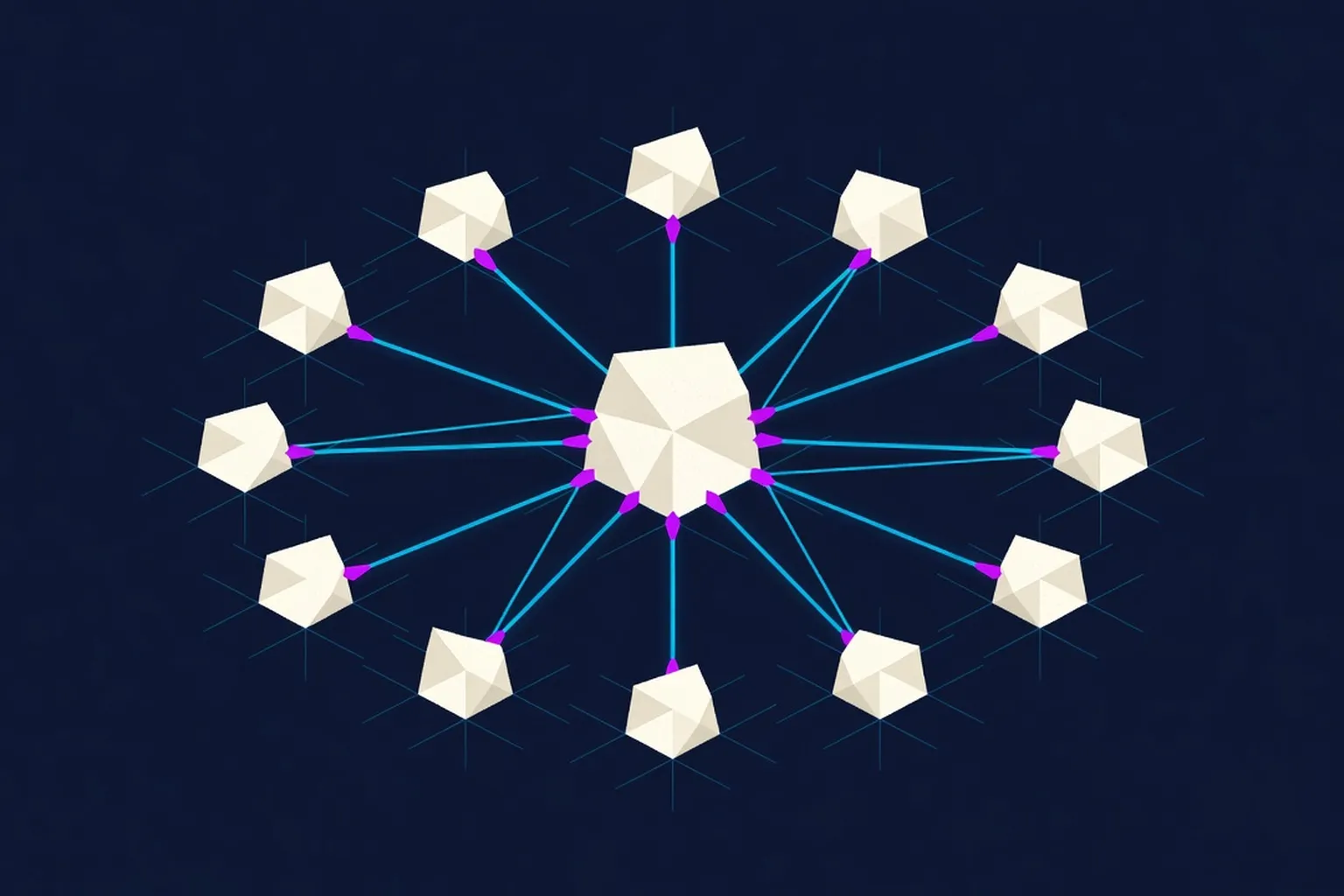
A: Leader election is the process by which a system dynamically selects a leader node to coordinate actions. In Paxos, this process can be intricate due to the need to ensure no split-brain scenarios occur. Raft simplifies this with a straightforward election protocol that uses randomized timers to ensure a single leader is chosen. Modern implementations like etcd and CockroachDB have refined these protocols further to handle real-world network conditions and failures. For instance, they incorporate mechanisms to quickly detect and replace failed leaders, ensuring minimal disruption. The efficiency of leader election greatly influences a system's overall performance and reliability.
For instance, in CockroachDB, the leader election process is optimized to minimize downtime and ensure that writes are not stalled for extended periods. By using a combination of heartbeats and election timeouts, CockroachDB can quickly adapt to node failures and re-elect leaders, maintaining high availability even in the face of network partitions or hardware failures. CockroachDB’s ability to re-elect leaders within milliseconds after a failure helps maintain a seamless experience for users, even during maintenance or unexpected outages. This rapid leader election process allows CockroachDB to achieve a write availability of over 99.999%, demonstrating the robustness and efficiency of modern leader election mechanisms.
Q: Log replication is another crucial aspect of ensuring consensus. Can you elaborate on its importance?
A: Log replication is at the heart of consensus protocols like Raft and Paxos. It involves copying the leader’s log entries to follower nodes to maintain consistency across the system. This ensures that once a decision is made, it is reflected across all nodes, providing a consistent state. Efficient log replication is vital for performance, as it directly impacts the speed and reliability of the system. Raft, for example, uses a leader-driven approach where the leader sends logs to followers, ensuring they are applied in order. This method simplifies consistency guarantees and is robust against node failures, which is why it is widely adopted in production systems. The causal ordering of these log entries traces back to Lamport’s foundational work on time and event ordering and the related analysis of virtual time and global states — both of which establish the theoretical basis for how replicated state machines reason about message ordering across distributed processes.
In systems like Apache Kafka, log replication ensures that all consumer offsets and metadata are consistently updated across brokers. Kafka’s log-based architecture relies on efficient replication to provide durability and fault tolerance, allowing it to handle large volumes of data with minimal latency. This replication mechanism enables Kafka to maintain high throughput and reliability, making it a cornerstone of modern data streaming architectures. Kafka can achieve replication latencies in the range of milliseconds, supporting real-time data processing and analytics. In the context of Raft, log replication is integral to maintaining the state machine’s correctness across distributed nodes, ensuring that all nodes converge to the same state, even amidst failures.
Q: What role does Byzantine fault tolerance play in modern consensus systems?
A: Byzantine fault tolerance (BFT) deals with the challenge of reaching consensus even when nodes may behave maliciously or unpredictably. While traditional consensus algorithms like Paxos and Raft handle crash failures, BFT extends this to handle arbitrary failures. The Byzantine Generals Problem byzantine-generals outlines the complexities involved in achieving agreement in such environments. The theoretical roots of group communication protocols that underpin BFT go back to virtual synchrony and the broader process group approach — both of which establish how sets of processes can maintain consistent views despite membership changes and failures. Modern BFT protocols, like PBFT, are designed to provide security in adversarial conditions, making them essential for applications requiring high security, such as blockchain and financial systems.
For example, the Tendermint protocol, used in the Cosmos blockchain, incorporates BFT to secure transactions and maintain consensus across a decentralized network. By ensuring that a supermajority of nodes agree on each block, Tendermint can withstand a certain percentage of malicious nodes while maintaining system integrity. However, BFT solutions are typically more complex and resource-intensive, which can limit their applicability. Tendermint can handle up to one-third of nodes failing maliciously and still reach consensus, showcasing its resilience in adversarial environments. In financial systems, BFT can provide the necessary assurances for high-value transactions, ensuring that even under attack, the system remains trustworthy and reliable.
Q: There is a common belief that consensus algorithms are too slow for real-time applications. How do you address this myth?
A: The perception that consensus algorithms are inherently slow stems from their need to coordinate multiple nodes, which can introduce latency. However, modern implementations and optimizations have significantly mitigated these issues. Techniques like pipelining, batching, and parallel processing allow systems to handle thousands of requests per second with minimal delay. Moreover, improvements in network infrastructure and hardware have reduced the overhead traditionally associated with consensus protocols. Systems like Google Chubby and others demonstrate that with well-designed architectures, consensus can support demanding real-time applications effectively.
At Google, for instance, the Chubby lock service uses consensus to manage distributed locks with minimal latency, supporting real-time applications like indexing and search. By optimizing network paths and leveraging data center optimizations, Chubby can deliver high-performance consensus operations, challenging the notion that consensus is too slow for time-sensitive tasks. Chubby’s ability to achieve consensus in under 10 milliseconds in certain scenarios illustrates how modern engineering can overcome the perceived drawbacks of consensus protocols. This performance level ensures that applications depending on Chubby, like Bigtable, can offer near-instantaneous responsiveness to user queries and data operations.
Q: How have modern systems like etcd, CockroachDB, and FoundationDB implemented consensus to meet today’s requirements?
A: Modern systems have built upon the foundational work of Paxos and Raft to meet contemporary demands for scalability, reliability, and performance. etcd, for instance, uses Raft to provide a robust key-value store that is integral to Kubernetes, ensuring consistent configuration across distributed systems. CockroachDB employs a variant of Raft to offer a distributed SQL database that scales seamlessly across regions while maintaining strong consistency. FoundationDB combines the strengths of Paxos with a layered architecture to deliver a highly available and transactional database. Each of these systems adapts consensus algorithms to their specific needs, optimizing for factors like latency, data distribution, and fault tolerance.
For example, FoundationDB leverages Paxos for its fault-tolerant transaction layer, ensuring that even in the face of server failures, transactions are committed consistently across distributed nodes. This allows FoundationDB to offer a seamless experience for developers needing ACID transactions in a distributed environment, highlighting the versatility and power of consensus algorithms in modern database architectures. FoundationDB’s architecture allows it to scale horizontally, supporting thousands of transactions per second with consistent latency and reliability. In the case of CockroachDB, the use of Raft allows it to offer a globally consistent database service that can handle cross-regional workloads with latencies comparable to those of single-region deployments, providing a powerful solution for globally distributed applications.

A: As we look ahead to 2026, I anticipate several advancements in consensus algorithms. First, we can expect continued improvements in performance through innovations in hardware acceleration and network optimizations. Technologies like RDMA (Remote Direct Memory Access) could be leveraged to reduce latency by allowing direct memory access between nodes. Secondly, the integration of machine learning techniques may provide adaptive tuning for consensus protocols, optimizing them for various workloads and conditions. Additionally, there will likely be increased focus on hybrid consensus models that combine the strengths of both classical and Byzantine fault-tolerant protocols, offering robust solutions for diverse environments.
Moreover, advancements in formal verification tools will enhance the reliability and security of consensus implementations, ensuring they meet the rigorous demands of future distributed systems. Modular storage frameworks like Stasis already demonstrate how layered transaction components can be composed and verified independently. On the data-structure side, CRDTs offer conflict-free merge semantics that sidestep consensus entirely for certain workloads, reducing the surface area that requires formal proof. These tools will enable developers to verify the correctness of complex consensus protocols, reducing the likelihood of errors and improving overall system robustness. As distributed systems continue to scale and evolve, these advancements will be crucial in maintaining the integrity and performance of consensus mechanisms. The potential for quantum computing to impact consensus protocols is also on the horizon, potentially bringing new paradigms in speed and security. Quantum algorithms might allow for consensus operations that are exponentially faster than current methods, fundamentally transforming the landscape of distributed systems.
Q: What advice would you give to engineers starting to work with consensus algorithms?
A: For engineers new to consensus algorithms, my advice is to start with the fundamentals. Understanding the core principles of Paxos and Raft will provide a solid foundation. I recommend reading “Paxos Made Simple” and the Raft paper to grasp the basic concepts. From there, explore modern implementations in systems like etcd and CockroachDB to see these principles in action. Practical experience in implementing and debugging these systems is invaluable.
Additionally, participating in communities and forums discussing group communication and consensus protocols can provide insights and support from experienced practitioners. These discussions often include real-world challenges and solutions, offering a hands-on perspective that complements theoretical understanding. Stay curious and keep experimenting, as the field is always evolving, and new breakthroughs are constantly shaping the landscape of distributed consensus. Engaging with open-source projects can also be a great way to gain practical experience and contribute to the community. Consider contributing to projects on platforms like GitHub, where you can collaborate with other developers and learn from real-world scenarios.
Key Takeaways
For broader context on how architects pick the right consensus stack across cloud providers, see the architecte logiciel — choix techno interview expert cloud, and for cybersecurity vocabulary needed when discussing Byzantine-fault settings with non-specialists, the lexique cybersecurite 30 termes essentiels provides a useful reference.
- Paxos and Raft are foundational algorithms for achieving consensus in distributed systems, each with unique strengths and challenges.
- Raft’s focus on understandability has led to widespread adoption in modern distributed systems.
- Multi-Paxos and EPaxos address limitations in traditional Paxos by enhancing throughput and fault tolerance.
- Leader election and log replication are critical components that influence the performance and reliability of consensus systems.
- Byzantine fault tolerance provides security against arbitrary failures, but at a higher complexity and resource cost.
- The myth that consensus is too slow is being dispelled by modern optimizations and implementations.
- Systems like etcd, CockroachDB, and FoundationDB leverage consensus algorithms to deliver scalable, reliable distributed databases.
- Future advancements in consensus may include hardware acceleration, machine learning integration, and hybrid models.
Further Reading
- Paxos Made Simple
- The Byzantine Generals Problem
- Virtual Synchrony — Birman & Joseph, 1987
- The Process Group Approach to Reliable Distributed Computing — Birman, 1993
- Google Chubby: The Lock Service for Loosely-Coupled Distributed Systems
- Time, Clocks, and the Ordering of Events in a Distributed System — Lamport, 1978
- CRDTs: Conflict-Free Replicated Data Types — INRIA, 2011
- Stasis: Flexible Transactional Storage
- Virtual Time and Global States of Distributed Systems
- Timestamps in Message-Passing Systems that Preserve Partial Ordering
See also: the KV-store lineage
See also: how to run a paper club