Kafka and Streaming Architectures for Distributed Databases
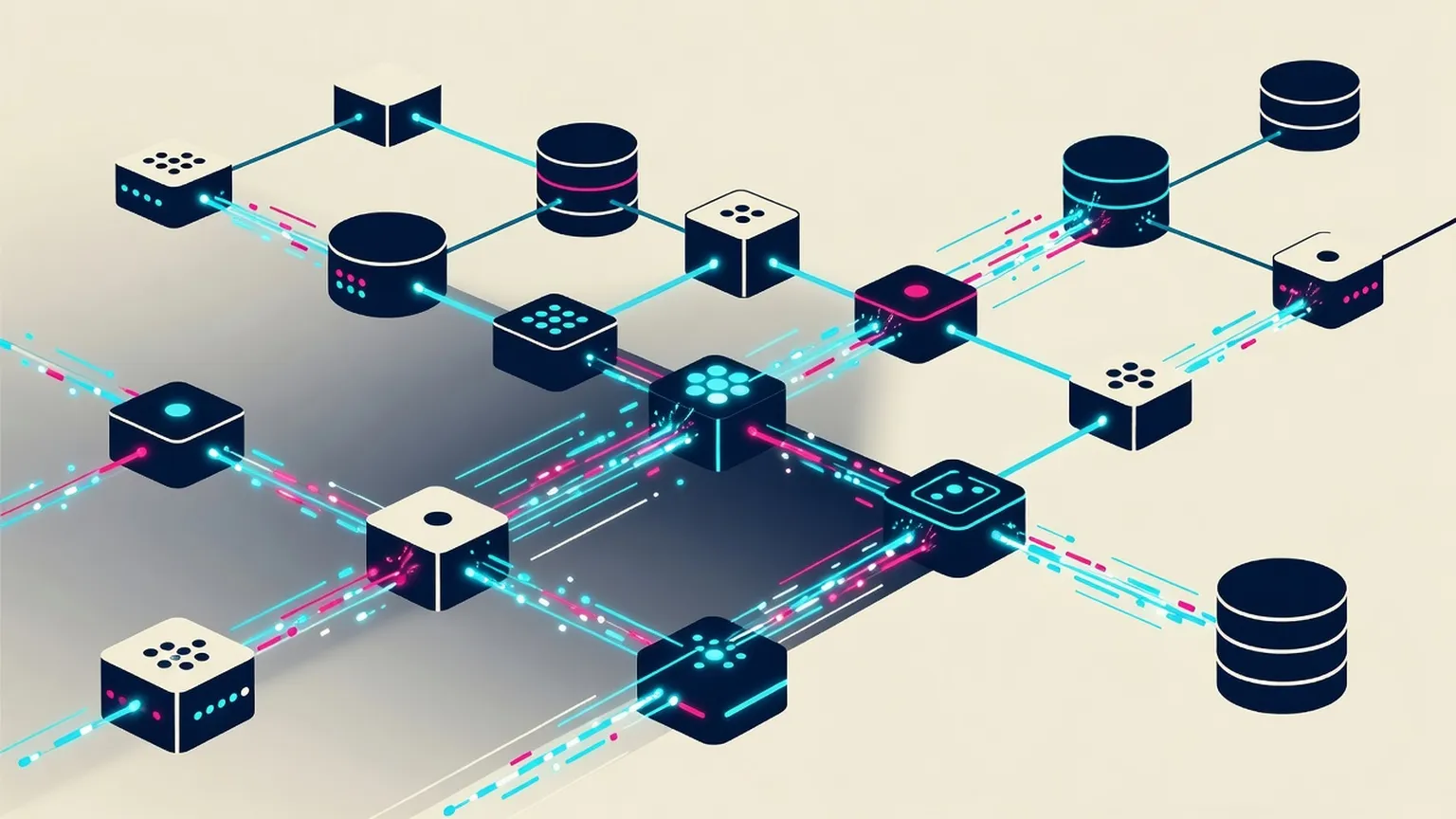
Event Streaming as the Backbone of Modern Distributed Databases
Event streaming platforms like Kafka have quietly become the connective tissue between distributed databases, transforming point-to-point replication into a durable, replayable log. This article traces how streaming architectures apply — and complicate — the consistency lessons of CAP and BASE.
Why Event Streaming Became Database Infrastructure
In the last decade, the landscape of distributed databases has evolved significantly. Event streaming has emerged as a crucial component of this infrastructure. The rise of streaming platforms like Apache Kafka has fundamentally altered how data flows across systems. Unlike traditional batch processing systems, which require periodic data extraction and transformation, streaming platforms enable real-time data processing and transfer. This shift allows organizations to react to data changes as they occur, leading to more responsive and dynamic applications.
Key Drivers
- Real-Time Processing Needs: With the rise of applications requiring real-time insights, the demand for immediate data processing has increased.
- Scalability: Event streaming systems like Kafka handle vast amounts of data with ease, supporting scalability far beyond what traditional databases offer.
- Decoupling Producers and Consumers: Streaming enables a decoupled architecture where producers and consumers operate independently, enhancing flexibility and reducing system complexity.
Change Data Capture: Turning a Database into a Stream
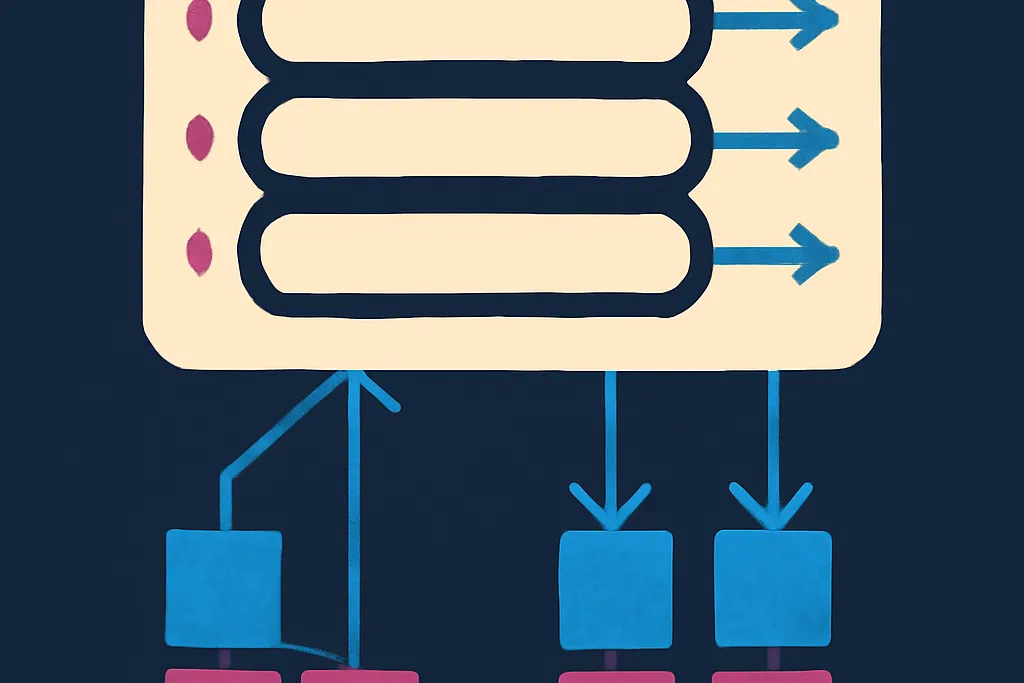
Change Data Capture (CDC) is a technique that transforms databases into streams of events. By capturing changes from a database’s transaction log, CDC allows these changes to be published as events that downstream systems can consume. This approach eliminates the need for polling the database, reducing load and latency.
CDC Benefits
- Efficiency: Reduces database load by avoiding frequent polling.
- Timeliness: Provides near-instantaneous data updates to downstream systems.
- Flexibility: Enables multiple downstream systems to independently react to data changes.
Kafka Partitions and the CAP Theorem in Practice
Kafka’s design inherently involves trade-offs reminiscent of the CAP theorem’s consistency-availability trade-off. Each Kafka topic is divided into partitions, with each partition having one leader and zero or more followers. During a network partition, Kafka must choose between consistency and availability.
Partitioning Mechanics
- Leader Election: Determines which node is responsible for writing and coordinating data for a partition.
- In-Sync Replica (ISR) Set: A subset of followers that are up-to-date with the leader, used to maintain consistency.
Key takeaway: Kafka’s reliance on partition leaders and ISRs demonstrates the CAP theorem in action, balancing consistency and availability during network partitions.
Exactly-Once Semantics: The Hardest Promise in Streaming
Providing exactly-once semantics is one of the most challenging aspects of streaming systems. Unlike at-least-once delivery, which can lead to duplicate processing, exactly-once semantics ensures that each event is processed precisely once, even in the face of failures or retries.
Achieving Exactly-Once
- Idempotent Producers: Ensure that duplicate messages do not affect the final outcome.
- Transactional Writes: Group multiple operations into a single atomic transaction to maintain consistency.
How Streaming Reshapes BASE and Eventual Consistency
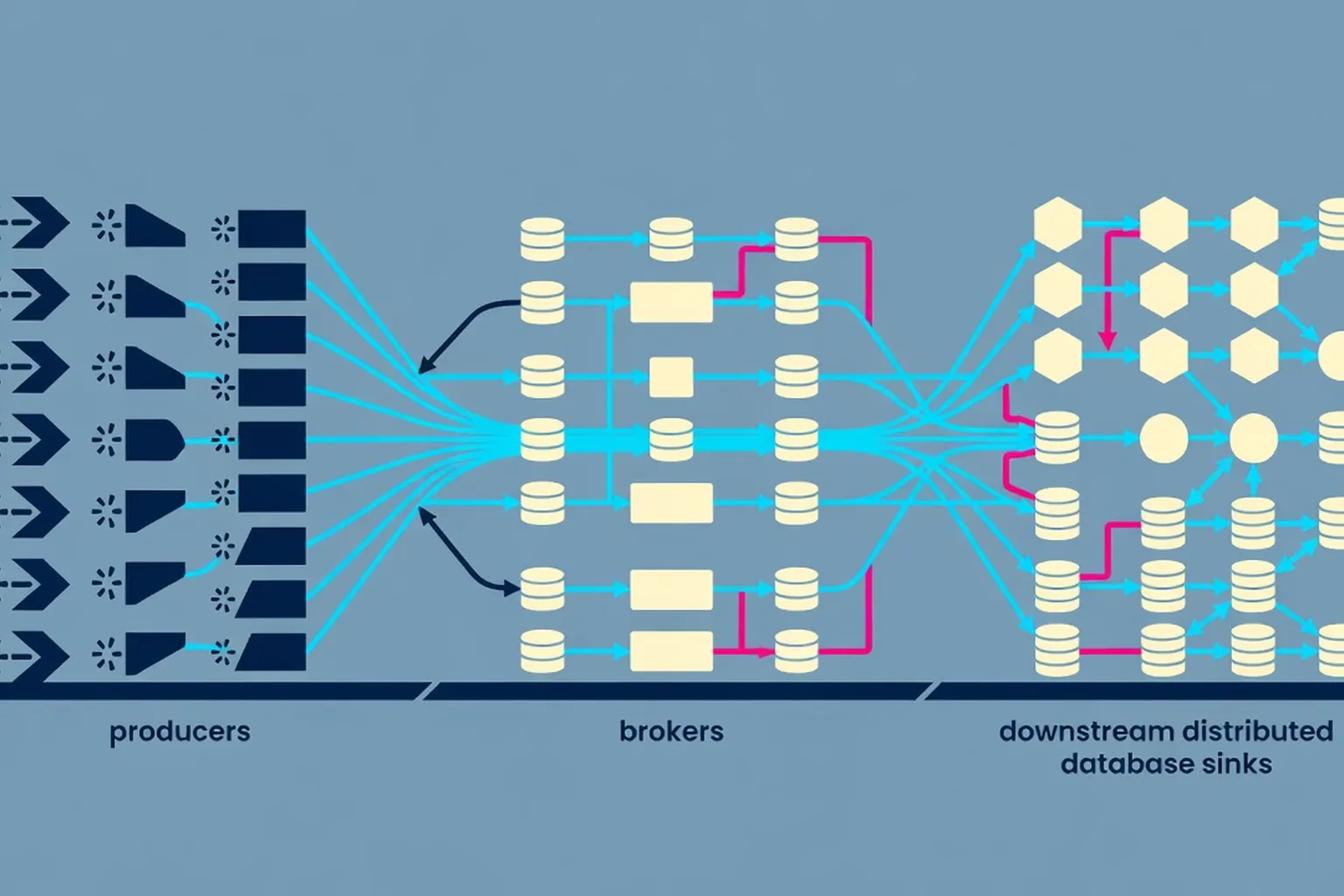
Streaming architectures bring new dimensions to BASE semantics and eventual consistency. In the eventually-consistent model streaming systems rely on, data changes propagate asynchronously, leading to temporary inconsistencies. Streaming systems, however, can provide near real-time propagation, narrowing the inconsistency window.
Streaming’s Impact
- Faster Consistency: Reduces the time to eventual consistency by processing changes as they occur.
- Enhanced Availability: Decoupled systems maintain higher availability even during failures.
- Scalable Flexibility: Supports dynamic scaling of consumers without affecting producers.
Log-Structured Storage: Why LSM-Trees Fit Streaming Workloads
Log-structured storage, particularly LSM-trees, is a natural fit for streaming workloads. LSM-trees as the storage engine underneath streaming-fed databases efficiently handle high write throughput and enable sequential log appends, which are crucial for streaming.
LSM-Tree Advantages
- Efficient Writes: Append-only logs minimize write amplification.
- Data Replay: Supports replay of historical data, a key feature of streaming systems.
Common mistake: Neglecting the importance of log-structured storage for streaming can lead to performance bottlenecks and increased latency.
Table: Batch vs Streaming Trade-offs for Distributed Databases
| Feature | Batch Processing | Streaming Processing |
|---|---|---|
| Latency | High (minutes to hours) | Low (milliseconds to seconds) |
| Scalability | Limited by batch size | High, scales with data volume |
| Complexity | Lower, simpler implementations | Higher, involves complex setups |
| Consistency | Typically eventual | Near real-time |
| Use Cases | Periodic analytics, ETL | Real-time analytics, microservices |
Common Failure Modes: Consumer Lag, Replay Storms, Ordering
In streaming architectures, several failure modes can affect system performance and reliability.
Key Failure Modes
- Consumer Lag: Occurs when consumers cannot keep up with the rate of new events, leading to increased processing delays.
- Replay Storms: Triggered when a failed consumer reprocesses a large number of events, overwhelming the system.
- Ordering Issues: Ensuring events are processed in the correct order is challenging, especially across distributed systems.
Case Pattern: Fan-Out from One Write to Five Downstream Stores
A common pattern in streaming architectures is the fan-out of a single write operation to multiple downstream stores. This pattern allows a single event to update caches, search indexes, analytics stores, and more, providing a unified data view across different systems.
Fan-Out Example
- Primary Database Update: A write operation occurs on the main database.
- Event Publication: The change is published as an event to a Kafka topic.
- Downstream Consumers: Five different systems consume the event, each updating its state.
Where Streaming Architecture is Heading in 2026
Looking ahead to 2026, streaming architectures are poised to become even more integral to distributed databases, extending well beyond the batch-oriented lineage of MapReduce’s batch-processing lineage that streaming replaced and the wider catalog covered in our reading list of foundational NoSQL papers. Advances in technology and engineering practices will likely focus on:
- Improved Fault Tolerance: Enhancing system resilience to failures and network partitions.
- More Granular Control: Allowing finer control over event processing and delivery guarantees.
- Integration with AI: Leveraging AI for smarter event processing and analytics.
Deep Dive into Kafka’s Architecture
Kafka, originally developed by LinkedIn and open-sourced in 2011, has since become the cornerstone of many streaming architectures. Its design is founded on the principles of a distributed commit log, allowing it to provide a robust mechanism for event storage and retrieval.
Kafka’s Core Components
- Producers: Producers publish data to topics, which are divided into partitions to allow parallel processing.
- Consumers: Consumers subscribe to topics and process data. They can be organized into consumer groups, with each group ensuring that each record is read by only one consumer.
- Brokers: Kafka brokers handle all data storage and retrieval requests. A typical Kafka cluster consists of multiple brokers to ensure reliability and scalability.
- ZooKeeper: Initially used by Kafka for managing metadata, coordinating distributed processes, and leader election. However, newer versions of Kafka have started moving away from ZooKeeper in favor of an in-house metadata quorum.
Key takeaway: Understanding Kafka’s architecture is critical to leveraging its full potential in streaming scenarios, ensuring efficient event handling and processing.
Advanced Use Cases: Real-Time Analytics and IoT
Kafka’s ability to handle high throughput, fault tolerance, and real-time processing has made it ideal for advanced use cases beyond traditional business applications.
Real-Time Analytics
Organizations are increasingly leveraging Kafka for real-time analytics, where data is ingested and processed instantaneously to derive insights on the fly.
- Example: A financial services firm uses Kafka to analyze stock market feeds in real-time, providing traders with up-to-the-second analytics to inform their trading strategies.
Internet of Things (IoT)
Kafka serves as a backbone for IoT ecosystems, where millions of devices transmit data continuously.
- Example: A smart city deployment uses Kafka to collect data from thousands of sensors, enabling real-time monitoring of traffic patterns, environmental conditions, and energy consumption.
Kafka Streams and ksqlDB: Stream Processing Made Accessible
While Kafka provides robust capabilities for data streaming, stream processing is made simpler and more powerful with tools like Kafka Streams and ksqlDB.
Kafka Streams
Kafka Streams is a lightweight, Java-based library that sits atop Kafka, allowing developers to build sophisticated stream processing applications without requiring a separate processing cluster.
- Features:
- Stateful Processing: Maintains local state with fault-tolerance.
- Windowing: Supports time-based operations for handling late-arriving data.
ksqlDB
ksqlDB is a streaming database purpose-built to work with Kafka, allowing for the execution of SQL queries on streaming data.
- Features:
- Continuous Queries: Enables persistent queries that run continuously, updating results as new data arrives.
- Materialized Views: Stores results of queries in real-time, making them immediately available for applications.
Common mistake: Underestimating the complexity of stream processing logic can lead to inefficient systems. Leveraging Kafka Streams and ksqlDB can mitigate these issues by providing higher-level abstractions.
Table: Comparison of Streaming Systems
| Feature | Apache Kafka | Apache Pulsar | Amazon Kinesis |
|---|---|---|---|
| Throughput | Up to millions of events/sec | Comparable to Kafka, with geo-replication | High, but varies by shard |
| Latency | Milliseconds | Milliseconds | Milliseconds |
| Storage | Log-based storage | Tiered storage (hot/cold) | Managed storage |
| Message Ordering | Per-partition | Per-topic or per-key | Per-shard |
| Use Cases | Real-time analytics, microservices | Geo-distributed systems, IoT | Real-time data processing |
Streaming Security: Ensuring Data Integrity and Privacy
With the growing reliance on streaming architectures, ensuring data security has become paramount. Kafka offers several features to secure data in transit and at rest.
Security Features
- Encryption: SSL/TLS encryption can be used to secure data in transit between producers, brokers, and consumers.
- Authentication: SASL (Simple Authentication and Security Layer) enables authentication of clients with the Kafka cluster.
- Authorization: Access control lists (ACLs) define which users or applications can access specific Kafka topics or operations.
Key takeaway: Implementing comprehensive security measures is critical to maintaining the integrity and confidentiality of data in Kafka-based streaming systems.
Future Directions: The Evolving Landscape of Streaming Architectures
As the demands on streaming architectures grow, several trends and innovations are set to shape their future.
Emerging Trends
- Edge Computing: Integrating Kafka with edge computing platforms to process data closer to the source, reducing latency and bandwidth usage.
- AI and Machine Learning: Real-time model training and inference directly on streaming data, enabling more intelligent applications.
- Serverless Architectures: Simplifying deployment and scaling of streaming applications by adopting serverless paradigms, reducing operational overhead.
The evolution of streaming architectures will continue to play a pivotal role in the development of next-generation distributed databases, providing the backbone for real-time data-driven applications.
Worked Example: Implementing a Streaming ETL Pipeline with Kafka
To illustrate the capabilities of Kafka in a practical context, consider the implementation of a streaming ETL (Extract, Transform, Load) pipeline.
Scenario
An e-commerce platform needs to process transaction data in real-time for fraud detection, customer analytics, and inventory management.
Steps
- Extract: Transactional data is ingested from the primary database using Kafka Connect’s JDBC source connector.
- Transform: Kafka Streams processes the data, applying transformations such as filtering fraudulent transactions and aggregating customer purchase history.
- Load: Processed data is written to various sinks, including a fraud detection engine, a customer analytics dashboard, and a real-time inventory management system.
This streaming ETL pipeline enables the e-commerce platform to react promptly to business events, providing a competitive edge in a fast-paced market.
Common mistake: Overlooking data schema management can lead to compatibility issues during transformations. Utilizing schema registries can help maintain data integrity across the pipeline.
Kafka’s Role in Microservices Communication
Kafka’s role in microservices architectures is pivotal due to its ability to decouple services and facilitate asynchronous communication. Microservices architectures often require services to interact in a loosely coupled manner, allowing each service to evolve independently and scale according to its load.
Benefits of Kafka in Microservices
- Decoupled Interaction: Kafka acts as a buffer between services, ensuring that producers and consumers are not directly dependent on one another. This decoupling allows services to be developed, deployed, and scaled independently.
- Durability and Replayability: Kafka’s log-based storage ensures that all events are stored durably and can be replayed, which is essential for recovering from failures and reprocessing events.
- Scalability: Kafka’s partitioning mechanism allows for horizontal scaling of consumers, ensuring that even as the load increases, the system can handle more events without bottlenecks.
Key takeaway: Leveraging Kafka in microservices architectures enhances resilience and flexibility by reducing inter-service dependencies and allowing for independent scaling.
Worked Example: IoT Data Pipeline with Kafka
Consider an industrial IoT setup where thousands of sensors on a factory floor send telemetry data to a central processing system for monitoring and analysis.
Implementation Steps
- Data Ingestion: Each sensor publishes its data to a specific Kafka topic. Multiple partitioning strategies can be applied, such as partitioning by sensor type or location for optimized processing.
- Stream Processing: Kafka Streams processes the incoming data to compute metrics like average temperature or humidity in different zones of the factory. This can involve aggregating data over time windows to detect anomalies.
- Data Storage and Alerts: Processed data is then stored in a time-series database for long-term analysis. Additionally, Kafka can trigger alerts via a separate notification service when anomalies are detected.
This pipeline enables real-time monitoring and quick response to changing conditions on the factory floor, improving operational efficiency and reducing downtime.
Table: Kafka vs Traditional Messaging Systems
| Feature | Apache Kafka | RabbitMQ | ActiveMQ |
|---|---|---|---|
| Message Model | Publish-subscribe, durable log | Queue-based, transient or durable | Queue-based, transient or durable |
| Performance | High throughput, scalable | Moderate throughput, scalable with effort | Moderate throughput, moderate scalability |
| Fault Tolerance | Strong, with replication | Good, with clustering | Good, with clustering |
| Ordering | Per-partition | Per-queue | Per-queue |
| Use Cases | Real-time streaming, event sourcing | Task distribution, RPC | Task distribution, RPC |
Challenges in Managing Kafka Clusters
Managing a Kafka cluster requires careful consideration of several operational challenges to ensure reliability and performance — many of the same trade-offs surfaced in our interview on chaos engineering for distributed databases, where fault injection routinely targets streaming brokers first.
- Broker Configuration: Proper configuration of brokers is crucial for performance tuning. Parameters such as
log.segment.bytesandnum.partitionsneed to be optimized based on workload characteristics. - Monitoring and Metrics: Tools like Prometheus and Grafana can be used to monitor Kafka metrics, such as consumer lag, under-replicated partitions, and broker health.
- Scaling and Capacity Planning: Adding brokers or increasing partitions requires careful planning to ensure balanced load distribution and prevent hotspots.
Common mistake: Failing to monitor Kafka’s health can lead to unnoticed issues that degrade performance over time. Regular monitoring and proactive maintenance are key to sustaining a healthy Kafka environment.
FAQ
Q: What is change data capture (CDC)?
A: CDC captures row-level changes from a database’s transaction log and publishes them as a stream of events, allowing downstream systems to react to writes without polling the database directly.
Q: How does Kafka relate to the CAP theorem?
A: Kafka partitions trade off availability and consistency similarly to any distributed system: a partition’s leader election and in-sync replica set determine how the system behaves during network partitions, directly echoing CAP-theorem trade-offs.
Q: What is exactly-once semantics in streaming?
A: Exactly-once semantics ensures each event is processed and reflected in downstream state exactly one time, even after retries or failures — a much harder guarantee than at-least-once delivery, achieved through idempotent producers and transactional writes.
Q: Why do streaming systems use log-structured storage?
A: Append-only logs are cheap to write sequentially and naturally support replay, which is exactly what LSM-tree-based storage engines (as used in Cassandra and many modern databases) are optimized for.
Q: Is streaming replacing traditional database replication?
A: Not replacing, but augmenting — streaming decouples producers and consumers so a single write can fan out to caches, search indexes, analytics stores, and vector databases without tight coupling.
For further insights into backend engineering patterns for event-driven applications, visit codeyourweb.org. Teams evaluating broker monitoring stacks can also review operational tooling coverage for distributed backend systems.