Interview: Chaos Engineering for Distributed Databases
About Marcus Delacroix
Marcus Delacroix is a seasoned site reliability engineer specializing in chaos engineering for distributed systems. With over a decade of experience running chaos engineering programs at two Fortune 500 fintech companies, Marcus has become a key figure in the field. His expertise lies in designing chaos experiments that test the resilience and fault tolerance of large-scale data infrastructures.
The Interview
Q: How did you get into chaos engineering?
A: My journey into chaos engineering began during my tenure at a fintech company that was undergoing a major shift to microservices. Our move towards distributed databases exposed us to complex failure modes that traditional testing couldn’t adequately address. I was part of a team tasked with ensuring system reliability amidst these changes. We were inspired by early adopters of chaos engineering like Netflix with their Chaos Monkey tool. The eye-opener for me was the realization that testing systems under controlled failure conditions could reveal weaknesses before they manifested in production. I started experimenting with basic fault injections like service shutdowns and latency spikes. Through trial and error, I refined these experiments, focusing on real-world scenarios. The success of these early tests, combined with the growing complexity of our systems, solidified my belief in chaos engineering as a crucial discipline. After leading several successful game days, I moved on to formalize the practice at another fintech, where we developed more sophisticated techniques, such as network partition testing, which aligned closely with adversarial fault models from the Byzantine Generals problem. Over time, chaos engineering became integral to our approach for ensuring robust service delivery.
Q: What’s the difference between testing and chaos engineering?
A: Traditional testing and chaos engineering serve distinct yet complementary roles in the development lifecycle. Conventional testing, whether unit, integration, or end-to-end, typically focuses on verifying that a system behaves as expected under predefined conditions. It checks against known requirements and is invaluable for catching issues during development. However, chaos engineering goes a step further by introducing unexpected conditions in a controlled manner to uncover hidden weaknesses. Unlike traditional tests, which might run in isolated environments, chaos experiments are often conducted in production or production-like settings. This difference is crucial; chaos engineering tests how a system behaves under real-world stresses, such as network partitions, node failures, or high latency, which are often overlooked by standard testing. For example, the CAP theorem chaos experiments are designed to validate whether a system maintains availability or consistency during network partitions, scenarios tough to replicate in a simple test suite. Moreover, chaos engineering emphasizes the element of surprise; it seeks to simulate unforeseen disasters rather than confirm expected behavior. This approach allows teams to better prepare for actual incidents by testing their response strategies and identifying systemic weaknesses that could lead to cascading failures under real-world conditions.
Q: Walk us through your first successful game day.
A: My first successful game day was both exhilarating and nerve-wracking. We planned meticulously, bringing together engineers, developers, and management to ensure everyone was aligned. The objective was to test our distributed database’s resilience to network partitions—an exercise to simulate the failure scenarios outlined by the CAP theorem chaos experiments are designed to validate. A week before, we conducted a pre-flight checklist to ensure readiness:
- Documented objectives clearly defined.
- Stakeholders briefed and supportive.
- Monitoring tools calibrated for real-time insight.
- Communication channels established.
On the day of the event, we started by injecting a simulated network partition between two critical database clusters. Our monitoring dashboards lit up immediately, showing increased latency and partial availability, confirming our system’s bias towards consistency under CAP constraints. The exercise also revealed a misconfiguration in our failover logic, a finding that might have been catastrophic if encountered unexpectedly. We gathered in a war room, analyzing data streams and adjusting configurations in real time. The game day concluded with a debriefing session, where we shared insights and defined action items for areas needing improvement. This first game day was a watershed moment; it validated our infrastructure’s resilience and highlighted the practicality of chaos engineering in enhancing our operational strategy.
Q: How does the CAP theorem show up in your fault injection design?
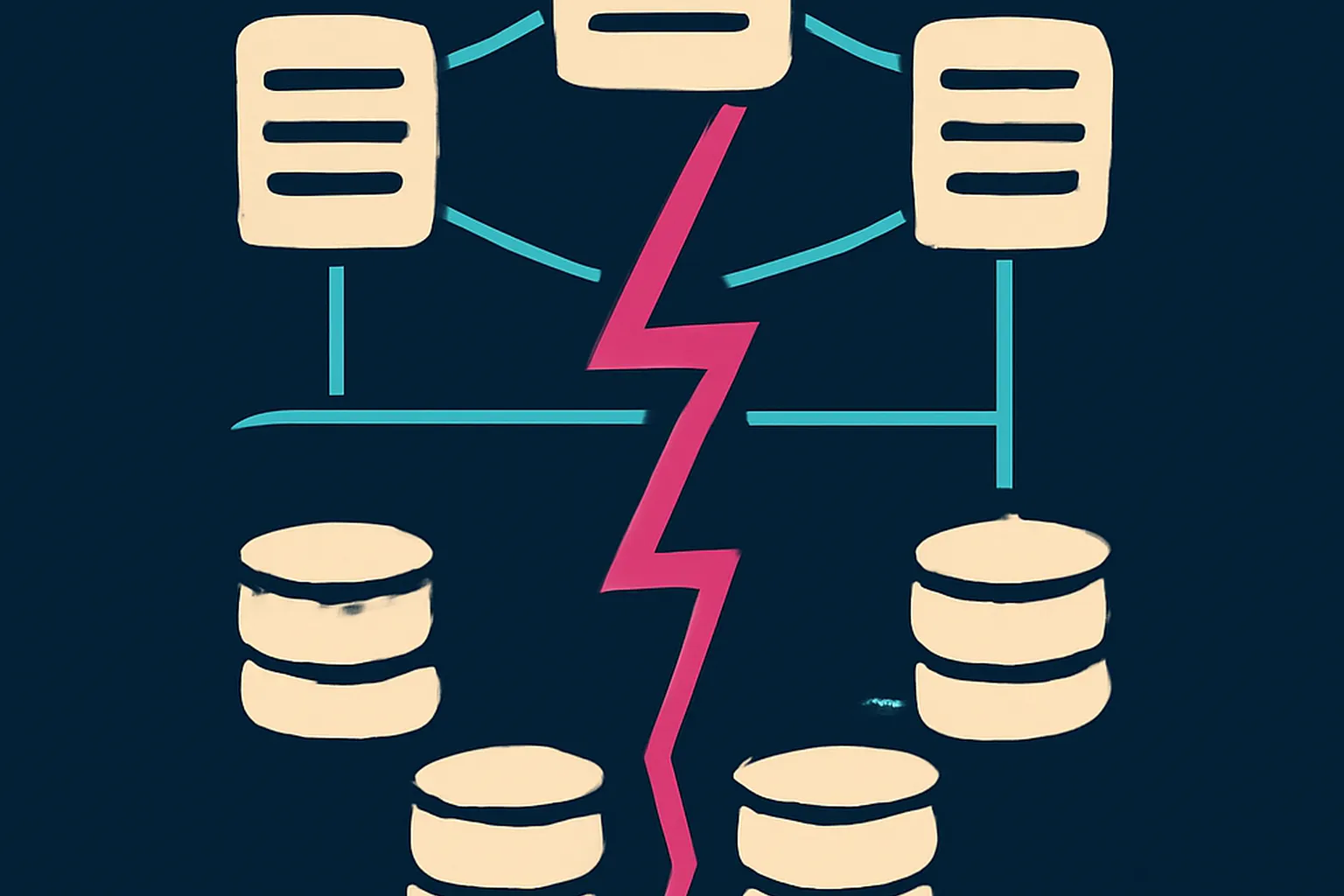
A: The CAP theorem is foundational in designing chaos experiments, particularly those that focus on fault injection in distributed databases. In essence, the theorem states that a distributed system can at most provide two out of the three guarantees: Consistency, Availability, and Partition Tolerance. In fault injection, we deliberately create network partitions to assess how well our systems manage the trade-offs between availability and consistency. For instance, when we inject a network partition, we are forcing the system to operate under the CAP constraints, observing whether it continues to serve requests (favoring availability) or stops serving requests to maintain consistency. This helps us understand the system’s actual behavior compared to the documented design intent. We align this with operational lessons from designing internet-scale services. Typically, a system that opts for consistency may not serve requests during partitions, which is acceptable if data correctness is critical. Our chaos experiments are designed to validate these behaviors, ensuring they match expectations. We use fault injection techniques to simulate scenarios like network latency, which can cause apparent partitions, observing how systems handle data synchronization and potential data loss.
| Fault Type | What It Simulates | Detection Signal | Typical Blast Radius |
|---|---|---|---|
| Network Partition | Inaccessible nodes | Increased latency, errors | System-wide |
| Node Crash | Sudden loss of service | Node downtime | Service-specific |
| Latency Injection | Delays in data processing | Higher response times | Targeted services |
| Disk Failure | Storage unavailability | IO errors, service degradation | Database-specific |
| Clock Skew | Time desynchronization | Timestamp anomalies | Cross-service |
Q: What’s the worst production incident chaos testing prevented?
A: One of the most severe incidents we averted thanks to chaos testing involved a cascading failure scenario in our payment processing pipeline. During a routine chaos experiment, we simulated a series of node crashes in a subset of our payment microservices. This uncovered a critical flaw in our service discovery mechanism, which caused requests to be misrouted under specific failure conditions. The issue was rooted in a dependency on an outdated load balancer configuration that couldn’t handle the dynamic scale of node failures. Had this gone unnoticed, it could have led to significant downtime during a high-traffic period, costing substantial revenue and customer trust. Our chaos engineering program allowed us to address this by refining the failover logic and updating our service discovery configuration. The exercise also enhanced our incident response protocols, ensuring faster diagnosis and recovery in future scenarios. By proactively identifying and addressing these vulnerabilities, we were able to ensure that our distributed system did not collapse under real-world stresses. This incident underscores the value of chaos engineering as not just a testing methodology but as a strategic approach to safeguarding critical systems.
Warning: A failure to identify system bottlenecks through chaos engineering can result in costly downtimes during critical business operations.
Q: How do you decide blast radius for an experiment?
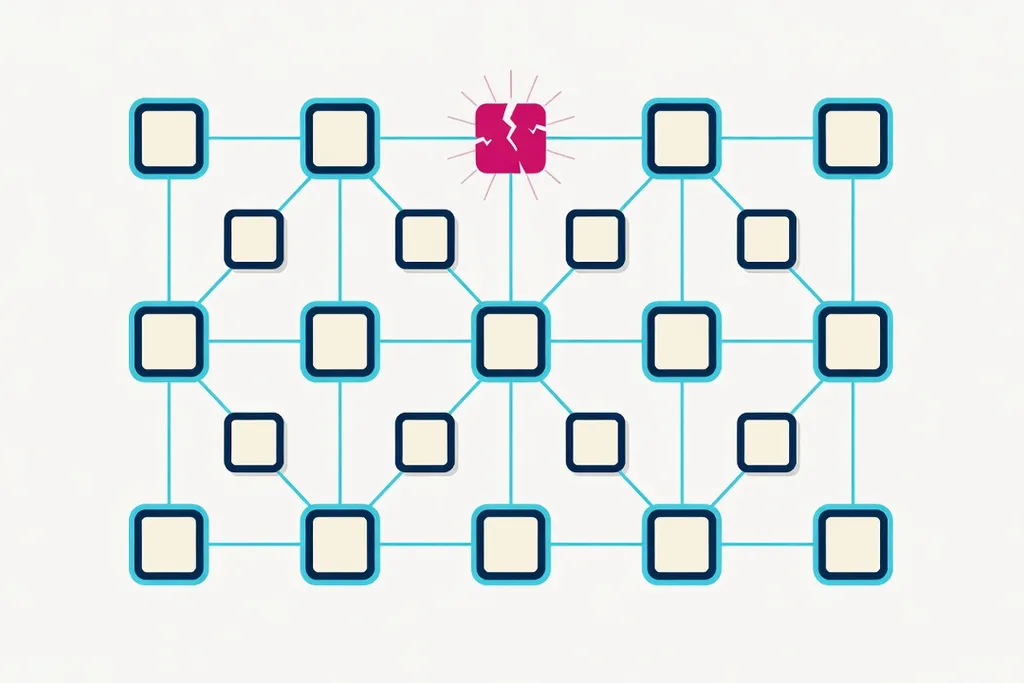
A: Determining the blast radius for a chaos experiment is a critical step that requires careful consideration to balance risk and insight. Several factors influence this decision:
- System Criticality: The more critical a system, the more conservative the initial blast radius should be. This minimizes potential impact on essential services.
- Redundancy and Failover: Systems with robust failover mechanisms can afford a larger blast radius because they are inherently more resilient.
- Team Readiness: It’s crucial to assess whether the incident response team is prepared to handle the potential fallout from an experiment.
- Historical Data: Previous incident reports and past experiment results can guide the appropriate scope for new tests.
In practice, we often start with a smaller blast radius, affecting non-critical components or segments of the system. This approach allows us to gauge the system’s response to failure and adjust parameters accordingly. As confidence grows in the system’s resilience and the team’s ability to manage incidents, we gradually increase the blast radius to include more critical services. This incremental approach ensures that we gather meaningful insights without jeopardizing the system’s integrity.
Note: Begin with minimal blast radius and expand incrementally based on system maturity and team preparedness to mitigate unintended impacts on production environments.
Q: Does Harvest/Yield actually inform your metrics?
A: Absolutely, the Harvest/Yield framework for graceful degradation is a significant factor in determining the metrics we use during chaos experiments. Harvest/Yield gives us a structured way to evaluate a system’s performance under failure conditions by defining what constitutes ‘enough’ success. ‘Harvest’ refers to the amount of data a system can return accurately during degradation, while ‘Yield’ is about the system’s availability for requests. By using this framework, we can tailor our metrics to assess how well our systems maintain data integrity and service availability when parts of the system are under duress. For example, during a network partition, we track both the consistency of returned data (Harvest) and the percentage of fulfilled requests (Yield). These metrics help us quantify the impact of failure injections and verify if the system adheres to its design goals. This approach not only aids in validating resilience but also identifies areas for improvement. By systematically measuring Harvest and Yield, we gain insights into the trade-offs our systems make and ensure they align with business priorities, helping us to refine our strategies and improve overall system robustness.
Q: What tools do you use for fault injection in 2026?
A: As of 2026, the landscape of chaos engineering tools has evolved significantly, offering more sophisticated and user-friendly options. We leverage a combination of open-source tools and custom-built solutions to conduct fault injection. Tools like Gremlin and Chaos Mesh remain staples, offering robust interfaces for orchestrating chaos experiments at scale. These tools have integrated machine learning capabilities that suggest potential fault scenarios based on historical data, making them invaluable in identifying weak points in a system. We also utilize Litmus for Kubernetes-based services, as it provides a comprehensive suite of experiments tailored for containerized environments. Beyond these, we’ve developed custom scripts for niche scenarios that off-the-shelf tools don’t cover, particularly those involving legacy systems or unique infrastructure setups. Additionally, our monitoring stack is heavily integrated with these tools, utilizing Prometheus and Grafana for real-time visibility into system performance during experiments. This integration ensures that we can correlate fault injections with system behaviors instantaneously, allowing for rapid adjustments and learning. The choice of tools is heavily influenced by the specific requirements of our infrastructure and the insights we aim to gain from each experiment.
Q: What’s a common mistake teams make starting chaos engineering?
A: One common mistake teams make when starting chaos engineering is diving into complex experiments without laying a solid foundational understanding. Many teams are eager to replicate high-profile chaos experiments conducted by companies like Netflix without first establishing the necessary monitoring and incident response infrastructure. This can lead to chaos tests that either yield no actionable insights or, worse, create unforeseen disruptions. It also helps to understand the failure modes you’re testing for at a protocol level — our earlier interview on consensus failure modes is a good primer on how leader election and log replication can silently go wrong during a partition, which is exactly the kind of failure a well-designed chaos experiment should surface. Another pitfall is ignoring the importance of stakeholder buy-in. Chaos engineering affects not just technical teams but the entire organization; hence, getting consent and understanding from all involved parties is crucial. Furthermore, teams often overlook the value of starting small. Launching large-scale experiments without first validating smaller, localized tests can overwhelm both the system and the team, leading to a loss of confidence and potential rollback of the chaos engineering initiative. Lastly, failing to document findings and iterate on the process can stagnate progress. Documented insights are vital for building a resilient system over time. Therefore, a methodical, incremental approach that emphasizes learning and adaptation is key to successfully implementing chaos engineering.
Q: What would you tell a team running their first chaos experiment?
A: For a team embarking on their first chaos experiment, my advice is to start small and keep it structured. Begin by defining clear objectives—what you aim to learn or validate through the experiment. Choose a non-critical system component for your initial test to minimize risk while gaining valuable insights. Make sure your monitoring and alerting systems are robust, as these will provide the feedback necessary to understand the impact of your experiment. Communication is key; ensure that all stakeholders are informed and on board with the chaos engineering process. Before starting, conduct a dry run to familiarize the team with the execution plan and prepare them for any anomalies that might occur. During the experiment, closely observe system metrics and user experience to identify areas of improvement. Post-experiment, conduct a thorough analysis of the results, document your findings, and discuss them with the team to refine future experiments. Remember, chaos engineering is not about breaking things for the sake of it; it’s about learning and improving system resilience. Incrementally expanding the scope of your experiments will build confidence and ensure that the practice becomes an integral part of your reliability strategy.
Key Takeaways
- Chaos engineering introduces unexpected conditions in controlled environments to reveal hidden weaknesses.
- The CAP theorem is foundational in designing fault injection, showing real-world trade-offs between availability and consistency.
- Game days simulate real outages, testing system resilience and incident response capabilities.
- Determining the blast radius involves assessing system criticality, redundancy, team readiness, and past data.
- The Harvest/Yield framework helps tailor metrics to evaluate system performance during degradation.
- Tools like Gremlin, Chaos Mesh, and Litmus are vital for orchestrating chaos experiments in modern infrastructures.
- Starting small and building incrementally ensures a successful chaos engineering practice.
- Stakeholder buy-in and thorough documentation are crucial for the long-term success of chaos engineering initiatives.
- Resilience testing practices shared with cybersecurity incident response can enhance overall system robustness.
- Teams building their own game-day tooling can also draw on backend engineering practices for fault-tolerant services.
FAQ
Q: What is chaos engineering?
A: Chaos engineering is the discipline of deliberately injecting failures — network partitions, node crashes, latency spikes — into production or production-like systems to validate that they degrade gracefully rather than catastrophically. By doing so, teams can uncover hidden weaknesses and improve system resilience.
Q: How does chaos engineering relate to the CAP theorem?
A: Chaos experiments that simulate network partitions directly test a system’s real-world CAP trade-off: does it stay available with stale data, or does it sacrifice availability to preserve consistency, and does that match the documented design intent? This helps validate the system’s behavior against its theoretical design.
Q: What is a game day?
A: A game day is a scheduled, coordinated exercise where a team deliberately triggers failures in a controlled window, with stakeholders watching dashboards and practicing incident response as if it were a real outage. It’s a practical way to test system resilience and team preparedness.
Q: Why inject faults in production instead of staging?
A: Staging environments rarely replicate production traffic patterns, data skew, or scale, so failure modes that only appear under real load are often invisible until tested in production with careful blast-radius controls. Testing in production ensures that experiments reflect real-world scenarios.
Q: How does Harvest/Yield thinking apply to chaos experiments?
A: The Harvest/Yield framework gives teams a vocabulary for what ‘partial success’ looks like during a fault — chaos experiments are the practical mechanism for measuring where a system falls on that harvest/yield curve under real degradation. This helps teams evaluate system performance and resilience effectively.