How to Run a Distributed Systems Paper Club: A Practical Guide
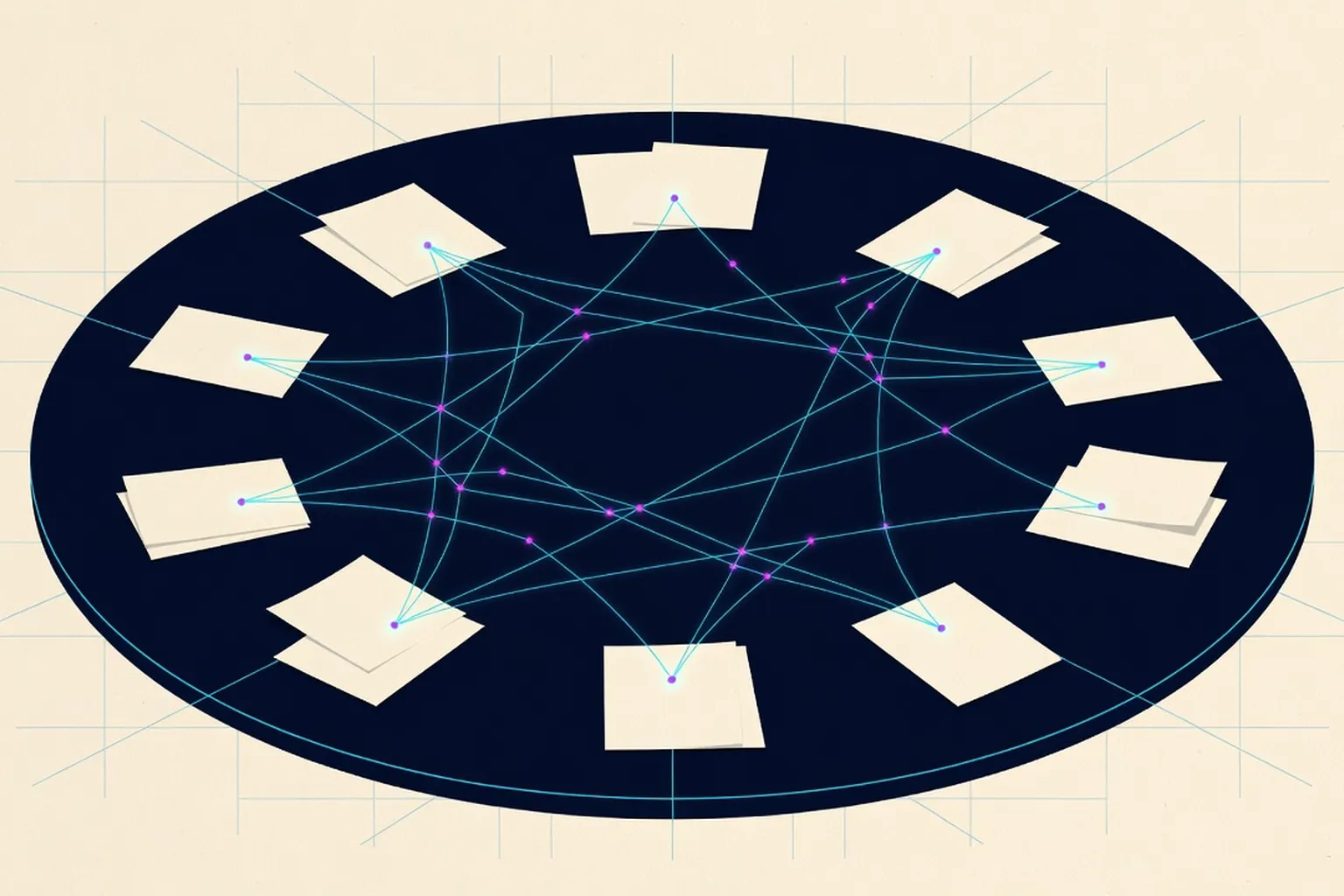
Distributed systems are the invisible backbone of modern technology, powering everything from your favorite social media app to global financial markets. Yet, truly understanding them — their complexities, trade-offs, and ingenious solutions — often feels like deciphering ancient hieroglyphs. Textbooks offer structured learning, but they can quickly become outdated or oversimplified, failing to capture the nuance of real-world engineering challenges. Online courses provide guided paths, but often lack the depth and interactive discussion vital for grasping truly difficult concepts.
This is where a distributed systems paper club shines. It offers a unique, collaborative, and deeply engaging way to explore the foundational and cutting-edge research that defines the field. By diving directly into the primary sources – the original papers written by the engineers and researchers who built these systems – you gain unparalleled insight into their motivations, design choices, and the problems they sought to solve. It’s an opportunity to learn not just what a system does, but why it does it that way, and what alternatives were considered and rejected.
A paper club transforms a solitary reading endeavor into a shared intellectual journey. It fosters critical thinking, sharpens your ability to articulate complex ideas, and builds a community of like-minded individuals. Whether you’re a seasoned engineer looking to deepen your expertise, a student eager to bridge theory and practice, or simply curious about the internals of the systems you use daily, a well-run distributed systems paper club is an invaluable tool for continuous learning and professional growth in 2026 and beyond.
Why a paper club beats a course
While structured courses and bootcamps have their place, a distributed systems paper club offers distinct advantages, particularly for experienced practitioners or highly motivated self-starters. The core benefit lies in its self-directed, deep-dive nature, which traditional courses often struggle to replicate.
Firstly, a paper club prioritizes primary sources. Instead of relying on an instructor’s interpretation or a textbook’s distillation, you engage directly with the original research. This means grappling with the authors’ own words, their specific problem statements, and the detailed rationale behind their design choices. This direct engagement fosters a much deeper and more nuanced understanding, allowing you to appreciate the historical context and the engineering trade-offs made at the time. You learn how to read and critique technical papers, a skill invaluable in any advanced engineering role.
Secondly, paper clubs are inherently community-driven. Learning complex topics in isolation can be daunting. A club provides a forum for discussion, debate, and collaborative problem-solving. Different members bring diverse backgrounds and perspectives, illuminating aspects of a paper that you might have missed. Someone from a database background might highlight the consistency model implications, while a network engineer might focus on fault tolerance mechanisms. This shared intellectual effort significantly enhances comprehension and retention. It also builds a professional network, allowing you to connect with peers facing similar challenges.
Thirdly, flexibility and relevance are key. Unlike a fixed curriculum, a paper club can adapt its focus to the group’s interests and current industry trends. Want to deep-dive into consensus algorithms? Spend a month on Paxos, Raft, and ZAB. Curious about serverless architectures? Pick papers on FaaS platforms and their underlying storage. This agility ensures that the learning remains relevant to your work or areas of interest, making the time investment more immediately valuable. There’s no tuition fee, just a commitment of time and intellectual curiosity, making it an incredibly cost-effective way to gain specialized knowledge.
Finally, a paper club cultivates a culture of critical thinking. You dont just passively absorb information; you actively question, challenge, and synthesize. What are the assumptions? What are the limitations? How would this system perform under different workloads or failure scenarios? This critical engagement transforms you from a consumer of knowledge into a producer of informed opinions, a crucial skill for designing and building robust distributed systems.
Choosing your first 6 papers — recommend specific ones from /papers/
Starting your distributed systems paper club with a solid foundation is crucial. The goal for your initial 6 papers should be to cover fundamental concepts, introduce diverse architectural patterns, and provide a mix of theoretical insights and practical system designs. This curated list will build a shared vocabulary and understanding among your members, preparing them for more advanced topics.
Here are 6 recommended papers, with a focus on foundational knowledge:
- The Google File System (GFS): While perhaps superseded by later systems, GFS is a seminal paper that introduced many concepts now common in distributed storage, including chunkservers, master/client architecture, and relaxed consistency for high throughput. It’s an excellent starting point for understanding large-scale distributed file systems and fault tolerance.
- MapReduce: Simplified Data Processing on Large Clusters: This paper revolutionized large-scale data processing. It presents a simple yet powerful programming model for parallel processing on commodity hardware. Understanding MapReduce is key to grasping batch processing, fault tolerance in computation, and the “divide and conquer” paradigm.
- Amazon Dynamo: A Highly Available Key-value Store: A cornerstone of NoSQL databases, Dynamo explores the trade-offs between consistency and availability, heavily influencing subsequent distributed key-value stores. It introduces concepts like eventual consistency, vector clocks, consistent hashing, and quorum-based replication, making it essential for anyone interested in highly available systems.
- Paxos Made Simple: Consensus is arguably the hardest problem in distributed systems, and Paxos is its most famous (and infamous) algorithm. Lamport’s “Paxos Made Simple” attempts to demystify it. While challenging, truly engaging with Paxos provides deep insights into achieving agreement in the face of failures, a fundamental building block for many consistent systems. Don’t be discouraged; the struggle is part of the learning!
- Brewer’s Conjecture and the Feasibility of Consistent, Available, Partition-Tolerant Web Services (aka CAP Theorem): This short, impactful paper lays out one of the most fundamental theoretical constraints in distributed systems. Understanding the CAP theorem’s implications—that you can only choose two out of Consistency, Availability, and Partition Tolerance—is critical for designing any distributed service. It frames many of the trade-offs seen in systems like Dynamo.
- The Transaction Concept: Virtues and Limitations (aka Gray et al. on Transactions): While often associated with traditional relational databases, understanding transactions (ACID properties: Atomicity, Consistency, Isolation, Durability) is crucial even in NoSQL contexts. This paper provides a foundational understanding of what transactions guarantee and their inherent costs, helping to appreciate why many distributed systems relax these properties for scalability or availability.
This initial selection provides a robust overview of distributed storage, computation, availability models, consensus, fundamental theory, and transaction semantics. It’s a challenging but rewarding start that will equip your club members with the essential knowledge to tackle more advanced topics.

## Cadence and format — weekly vs biweekly, live vs async, hybrid models
Establishing the right cadence and format is crucial for the long-term success and engagement of your paper club. It needs to balance the depth of learning with the practical realities of busy schedules.
Cadence: Weekly vs. Biweekly
- Weekly:
- Pros: Maintains momentum, keeps topics fresh, fosters consistent engagement. Allows for quicker progression through papers.
- Cons: High time commitment for members (reading, preparing, attending). Can lead to burnout, especially for longer or more complex papers like Paxos. Less forgiving if members fall behind.
- Best for: Highly dedicated groups, smaller papers, or during periods with fewer external commitments (e.g., an “8-week summer intensive”).
- Biweekly:
- Pros: More time for in-depth reading, reflection, and preparation. Reduces pressure, making it more sustainable for most working professionals. Allows for tackling longer or more challenging papers.
- Cons: Slower progress, potential for momentum to wane between sessions. Some topics might feel less fresh after two weeks.
- Best for: Most paper clubs, especially those with members balancing work and other commitments. It strikes a good balance between depth and sustainability.
Format: Live vs. Async vs. Hybrid
- Live (Synchronous) Sessions:
- Description: All members meet at a specific time, either in-person or via video conferencing (e.g., Zoom, Google Meet).
- Pros: Real-time interaction, dynamic discussions, immediate clarification of doubts, strong sense of community. Easier for facilitators to guide the conversation.
- Cons: Requires scheduling coordination across different time zones or busy schedules. Missed sessions mean missed discussions. Can be intimidating for quieter members.
- Best for: Groups with flexible schedules, co-located teams, or those prioritizing immediate interaction and community building.
- Tip: Keep live sessions focused, perhaps 60-90 minutes, with a clear agenda to maximize efficiency.
- Asynchronous Discussions:
- Description: Discussions happen over an extended period (e.g., a week) using text-based platforms (e.g., Discord, GitHub Discussions, Slack). Members post questions, insights, and replies at their convenience.
- Pros: Highly flexible, accommodates diverse time zones and schedules. Allows for more thoughtful, detailed responses. Provides a written record of discussions. Empowers quieter members to contribute.
- Cons: Lacks the immediacy and spontaneity of live interaction. Can be harder to maintain engagement without a live anchor. Discussions might become fragmented.
- Best for: Geographically dispersed groups, members with highly unpredictable schedules, or those who prefer to process information and formulate thoughts before responding.
- Hybrid Model:
- Description: Combines elements of both live and asynchronous. For example, asynchronous discussion throughout the week to surface questions and initial thoughts, culminating in a live session to dive deep into specific points, answer complex questions, and synthesize insights.
- Pros: Leverages the strengths of both formats. Async pre-work can make live sessions more productive and focused. Caters to different learning styles.
- Cons: Requires more coordination from the facilitator to manage both channels effectively.
- Best for: Most groups, as it offers the best of both worlds. A common setup might be:
- Week 1 (Async): Paper announcement, initial questions posted, members read and comment.
- Week 2 (Live): 90-minute discussion session, followed by post-session async follow-ups.
- This “biweekly hybrid” model often proves to be the most sustainable and effective for distributed systems paper clubs.
When deciding, conduct a poll among potential members to gauge their preferences and availability. Be prepared to iterate on the format after a few sessions to find what works best for your specific group.
Facilitator’s checklist — 8–10 bullet checklist
The facilitator is the linchpin of a successful paper club. Their role is to ensure smooth operations, foster engaging discussions, and keep the club on track. Here’s a practical checklist for facilitators:
- Paper Selection & Distribution:
- Action: Select the next 1-2 papers well in advance (e.g., 4 weeks out). Ensure papers are accessible (public PDFs, institutional access, or direct links). Distribute links and reading instructions clearly.
- Tip: Provide a brief blurb for each paper, explaining its relevance and what to focus on.
- Schedule & Communication:
- Action: Clearly communicate the reading schedule, discussion dates/times, and chosen platform (Discord, Zoom link, etc.). Send reminders a few days before each discussion.
- Tip: Use a shared calendar or scheduling tool (e.g., Google Calendar, Doodle Poll) for recurring events.
- Discussion Prompts & Guiding Questions:
- Action: Before each session, prepare 3-5 open-ended questions to kickstart the discussion. These should cover the paper’s core contributions, challenges, limitations, and real-world implications.
- Example Questions: “What problem does this paper solve, and what’s its core contribution?”, “What are the key assumptions made by the authors?”, “What are the trade-offs in this system’s design?”, “How might this system fare under different failure modes or workloads?”, “How does this paper relate to systems you’ve worked with or other papers we’ve read?”
- Moderation & Time Management:
- Action: During live sessions, actively moderate to ensure everyone has a chance to speak, keep discussions on topic, and manage time effectively. Gently redirect tangents.
- Tip: Encourage respectful debate and ensure no single person dominates the conversation. It’s okay to “park” a discussion point if it’s too deep or tangential for the current session, promising to revisit it later.
- Encourage Participation:
- Action: Actively solicit input from quieter members. Create a welcoming environment where questions and “dumb” questions are encouraged.
- Tip: For async discussions, tag specific members to encourage their input on a topic relevant to their expertise.
- Summarize & Synthesize:
- Action: At the end of each discussion, briefly summarize the key takeaways and any unresolved questions.
- Tip: Post a written summary in your async channel for those who missed the live session or want a recap.
- Feedback Loop:
- Action: Periodically (e.g., every 3-4 papers) solicit feedback from members on the club’s format, pace, paper choices, and facilitation.
- Tip: Use anonymous surveys if members are hesitant to give direct feedback.
- Technical Setup:
- Action: Ensure all necessary tools (video conferencing, discussion board) are set up, tested, and accessible to all members. Provide clear instructions for joining.
- Tip: Have a backup plan in case of technical glitches.
- Maintain a Paper Backlog:
- Action: Keep a running list of potential future papers, perhaps allowing members to suggest and vote on topics. This ensures continuity and member buy-in.
- Tip: Categorize papers (e.g., “Consensus,” “Storage,” “Streaming”) to help guide future selections.
By diligently following this checklist, a facilitator can transform a group of individuals into a thriving, knowledgeable, and engaged distributed systems paper club.

## Reading techniques — Adler's three-pass method adapted to distributed-systems papers
When discussing partition-tolerance trade-offs, facilitators routinely revisit the CAP theorem paper and the Yahoo PNUTS paper as canonical reference points.
Facilitators looking to deepen their own technical reading habits often borrow from the architect-level technology choices interview, which walks through how senior engineers structure their literature reviews. For asynchronous clubs that maintain shared note repositories, the practical patterns in vibe coding with Cursor, Copilot, Devin, Cline and Claude Code illustrate how AI-assisted tooling can speed up paper-summary drafts without losing technical rigor.
Distributed systems papers are dense, often filled with complex algorithms, intricate diagrams, and subtle nuances. Simply reading them once, cover-to-cover, is rarely sufficient for true comprehension. Adapting Mortimer J. Adler’s “How to Read a Book” three-pass method can significantly improve your understanding and retention.
Pass 1: The Survey (15-30 minutes)
This initial pass is about getting the lay of the land, understanding the paper’s scope, and identifying its core contribution. Think of it as skimming for the big picture.
- Read the Title, Abstract, and Keywords: What is the paper about? What problem does it claim to solve?
- Read the Introduction: This section typically outlines the problem, the motivation, the proposed solution, and the paper’s contributions. Pay close attention to the thesis statement.
- Scan Section Headings and Subheadings: Get a sense of the paper’s structure and the logical flow of arguments.
- Look at Figures and Tables: What are the key architectural diagrams? What data is being presented? What do the graphs show? Read their captions carefully.
- Read the Conclusion/Future Work: What did the authors achieve? What are the main takeaways? What are the known limitations or areas for future research?
- Read the References (selectively): Identify any familiar names or papers. This can help contextualize the work.
- Goal of Pass 1: After this pass, you should be able to answer: What is the paper’s main idea? What problem does it solve? What are its primary contributions? Do I need to read this paper in detail? This pass helps you decide if it’s relevant and provides a mental framework for the deeper dives.
Pass 2: The Detailed Read (1-3 hours, depending on paper complexity)
This is where you engage with the paper’s arguments, details, and evidence. This pass requires active reading and note-taking.
- Read the Entire Paper Carefully: Go through section by section, paragraph by paragraph.
- Highlight Key Sentences and Definitions: Focus on definitions of terms, system components, algorithms, and crucial design decisions.
- Take Notes:
- Problem Statement: Re-articulate the problem in your own words.
- Proposed Solution/System Design: Break down the architecture, algorithms, and mechanisms. Draw your own simplified diagrams if it helps.
- Assumptions: What does the system assume about the environment (e.g., network reliability, clock synchronization, failure models)? These are often subtle but critical.
- Trade-offs: What are the compromises made (e.g., consistency vs. availability, latency vs. throughput, complexity vs. simplicity)?
- Evaluation: How did the authors test their system? What metrics did they use? What were the results? Are the results convincing?
- Challenges/Limitations: What issues did the authors encounter? What problems remain unsolved?
- Engage with the “Why”: For every design choice, ask why the authors made that decision. What alternatives did they consider?
- Look up Unfamiliar Terms: Dont skip over jargon. Use external resources to understand concepts you dont grasp.
- Goal of Pass 2: You should now understand the paper’s arguments, how the system works, and the details of its implementation. You should be able to explain the paper to someone else.
Pass 3: The Review and Synthesize (30-60 minutes)
This final pass is about consolidating your understanding, critiquing the paper, and connecting it to broader knowledge.
- Summarize in Your Own Words: Write a concise summary (1-2 paragraphs) of the paper’s key contributions, its strengths, and its weaknesses.
- Critique the Paper:
- Are the claims supported by the evidence?
- Are the assumptions reasonable?
- What are the potential failure modes not addressed?
- How could the system be improved?
- What questions do you still have?
- Relate to Other Papers/Systems: How does this paper compare to others you’ve read? Does it build upon previous work? Does it present an alternative approach? How does it apply to real-world systems you know? For example, after reading Amazon Dynamo, how do its principles manifest in Cassandra or Riak? After Paxos Made Simple, how does it compare to Raft or ZAB?
- Formulate Discussion Points: Based on your critique and synthesis, prepare specific questions or points to bring up in the paper club discussion.
- Goal of Pass 3: You should have a deep, critical understanding of the paper and be ready to contribute meaningfully to a discussion, articulating its significance and limitations. This method transforms passive reading into active learning, making complex distributed systems papers much more approachable and rewarding.
Common pitfalls — 5–6 named pitfalls with fixes
Running a paper club, while rewarding, comes with its own set of challenges. Being aware of common pitfalls and having strategies to address them can save your club from fizzling out.
-
Pitfall: Lack of Consistent Participation
- Problem: Members consistently dont read the paper, show up unprepared, or drop out. This leads to superficial discussions and discourages engaged members.
- Fixes:
- Manage Expectations Early: Clearly communicate the time commitment and expectation of pre-reading.
- Choose Appropriate Cadence: A biweekly schedule often works better for busy professionals than a weekly one.
- Facilitator Engagement: Actively solicit input from quieter members and create a welcoming, non-judgmental environment. People are more likely to participate if they feel safe to ask “dumb” questions.
- Smaller Group Size: For live discussions, 6-10 active members is ideal. Larger groups can dilute participation.
- “No Shame” Policy: Emphasize that it’s okay if someone didn’t fully grasp everything, but encourage them to come with questions rather than just silence.
- Rotating Facilitators: If a group is experienced enough, rotate facilitation duties. This encourages deeper engagement and shared ownership.
-
Pitfall: Discussions Become Too Technical or Abstract (or too basic)
- Problem: Discussions either get bogged down in overly niche implementation details only a few understand, or they stay too high-level without diving into the “how.”
- Fixes:
- Facilitator’s Role as Guide: The facilitator needs to skillfully steer the conversation. If it gets too deep, ask, “How does this detail impact the system’s overall goal or trade-offs?” If it’s too abstract, ask, “Can we think of a concrete example of this in a real system?”
- Pre-planned Questions: Use a mix of questions that cover the “what,” “how,” and “why” of the paper, as well as its practical implications.
- Connect to Real-World Systems: Always encourage members to relate the paper’s concepts to systems they’ve worked with (e.g., “How does Google MapReduce compare to Spark?”). This grounds the discussion.
-
Pitfall: Poor Moderation or Domineering Members
- Problem: One or two members dominate the conversation, or the discussion spirals into tangents without resolution.
- Fixes:
- Clear Ground Rules: Establish rules like “one person speaks at a time,” “no interruptions,” and “everyone gets a chance to contribute.”
- Facilitator Intervention: The facilitator must be prepared to gently interrupt, redirect, and ensure equitable participation. Phrases like “Thanks for that insight, X, lets hear from Y now” or “That’s an interesting point, but lets bring it back to the paper’s core ideas” are useful.
- Timeboxing: Allocate specific times for different sections of the paper to ensure balanced coverage.
-
Pitfall: Inconsistent Cadence or Scheduling Issues
- Problem: Meetings are frequently rescheduled, canceled, or members struggle to find a consistent time, leading to frustration and attrition.
- Fixes:
- Poll for Best Time: Use tools like Doodle Poll or Calendly to find the optimal recurring time for the majority.
- Commitment to Schedule: Once a cadence and time are chosen, stick to it rigorously. Treat it like an important meeting.
- Hybrid Model: Use asynchronous discussions for flexibility, reserving live sessions for critical synthesis, which can be less frequent.
- Dedicated Channel: Have a specific communication channel (e.g., Discord announcements) for all scheduling updates.
-
Pitfall: Paper Selection Mismatch (Too Hard/Too Easy/Irrelevant)
- Problem: Papers are consistently too difficult, too simple, or dont align with the group’s interests, leading to disengagement.
- Fixes:
- Start Foundational: Begin with a mix of classic, foundational papers as suggested in this guide.
- Solicit Input: Regularly ask members for suggestions on papers they’d like to read. Maintain a backlog.
- Vote on Papers: Allow members to vote on future papers from a curated list. This increases buy-in.
- Provide Context: For particularly challenging papers (like Paxos Made Simple), provide supplementary resources (blog posts, videos) to aid understanding.
-
Pitfall: Lack of Follow-up or Actionable Outcomes
- Problem: Discussions end without clear conclusions, summaries, or next steps, making the effort feel less impactful.
- Fixes:
- Facilitator Summary: Always end a session with a brief summary of key takeaways and any open questions.
- Written Notes/Minutes: Post concise notes or a summary of the discussion in your async channel.
- Connect to Future Readings: Explicitly link the current paper’s concepts to the next one, building a coherent learning path.
- Encourage Application: Prompt members to think about how the concepts could apply to their own work or projects.
By proactively addressing these common pitfalls, your distributed systems paper club can thrive, fostering a vibrant and effective learning environment.
Tools and infrastructure — Discord, GitHub Discussions, Obsidian, Notion
Effective tools are the backbone of a successful distributed systems paper club, especially for geographically dispersed groups. They facilitate communication, organization, discussion, and knowledge retention. Here are some popular and effective choices:
-
Discord (or Slack for professional settings)
- Purpose: Real-time chat, asynchronous discussion, voice/video calls.
- How to use:
- Channels: Create dedicated channels for announcements (
#general), paper discussions (#paper-name-discussion), scheduling (#logistics), and even casual chat (#watercooler). - Voice Channels: Use for live synchronous discussions, allowing easy screen sharing for diagrams or specific paper sections.
- Threads: Encourage using threads for specific points within a paper discussion to keep conversations organized.
- Bots: Can be used for reminders, polls, or even pulling paper abstracts.
- Channels: Create dedicated channels for announcements (
- Pros: Excellent for community building, highly interactive, supports both async and sync.
- Cons: Can get noisy if not well-moderated.
-
GitHub Discussions (or GitLab Issues/Discussions)
- Purpose: Structured asynchronous discussions, Q&A, knowledge base.
- How to use:
- Repository: Create a dedicated GitHub repository for your paper club.
- Discussions Tab: Each paper can have its own discussion thread. Members can post questions, share insights, and comment.
- Categorization: Use categories (e.g., “Consensus Papers,” “Storage Systems”) to organize discussions.
- Markdown Support: Excellent for formatting code snippets, equations, and diagrams.
- Wiki/Pages: Use the GitHub Wiki feature to maintain a shared reading list, summaries, or a glossary of terms.
- Pros: Great for structured, long-form discussions, provides a persistent record, familiar to many engineers.
- Cons: Less real-time than Discord, not ideal for spontaneous voice calls.
-
Obsidian (or Logseq, Roam Research for personal knowledge management)
- Purpose: Personal note-taking, knowledge graph creation, linking ideas.
- How to use:
- Individual Notes: Each member can create a dedicated note for each paper, summarizing it, noting key concepts, and asking questions.
- Linking: Use Obsidian’s bidirectional linking to connect concepts across different papers (e.g., link “vector clocks” from Dynamo to other papers discussing eventual consistency).
- Graph View: Visualize how different papers and concepts are interconnected, helping to build a holistic understanding of distributed systems.
- Shared Vault (Optional): While primarily personal, a shared Obsidian vault could be used for collaborative note-taking on specific papers, though this requires careful synchronization.
- Pros: Powerful for deep individual learning and synthesizing complex information.
- Cons: Primarily a personal tool; requires extra effort to share insights with the group.
-
Notion (or Confluence, Google Docs for collaborative workspaces)
- Purpose: Centralized workspace for organization, documentation, collaborative notes, scheduling.
- How to use:
- Reading List Database: Create a database of papers with fields for status (to read, reading, discussed), links, suggested discussion dates, and a brief summary.
- Meeting Notes: Use Notion pages for collaborative note-taking during live sessions or for posting asynchronous summaries.
- Resource Hub: Store supplementary materials, links to relevant blog posts, videos, or even a glossary of distributed systems terms.
- Calendar View: Integrate meeting schedules directly into your workspace.
- Pros: Highly flexible, great for organizing diverse information, supports rich media and collaborative editing.
- Cons: Can become overwhelming if not structured well.
A typical setup might involve:
- Discord for real-time chat, announcements, and live discussion sessions.
- Notion as the central hub for the reading list, schedule, and collaborative notes/summaries.
- GitHub Discussions for deeper, more structured asynchronous debates on specific papers that warrant extended text-based analysis.
- Obsidian for individual members to process, link, and retain the knowledge from the papers.
The key is to choose tools that your members are comfortable with and that serve the specific needs of your club, ensuring they
See also: the 2026 paper-club edition
See also: top 12 must-read papers