Event Sourcing and CQRS for Distributed Systems in 2026
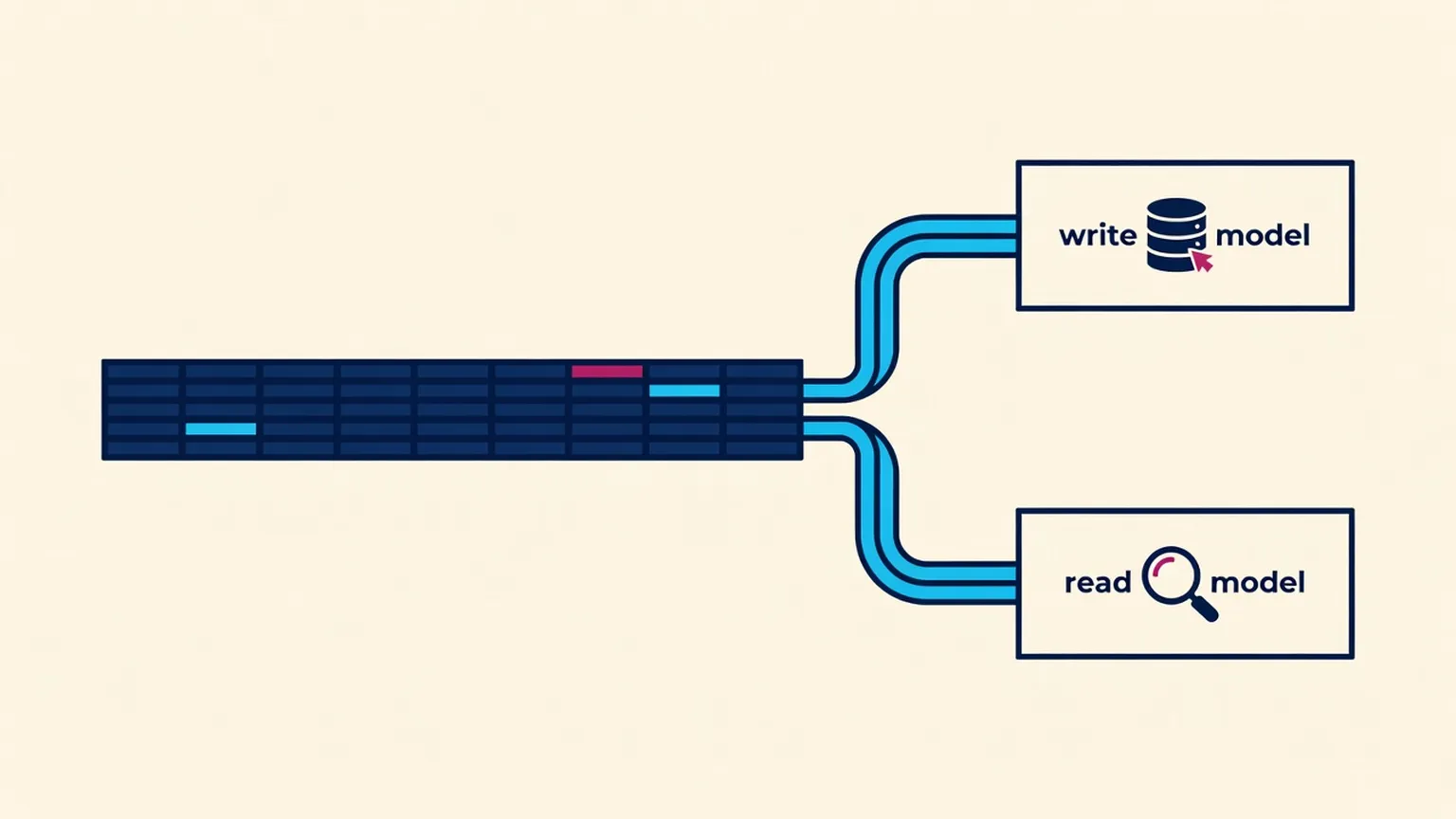
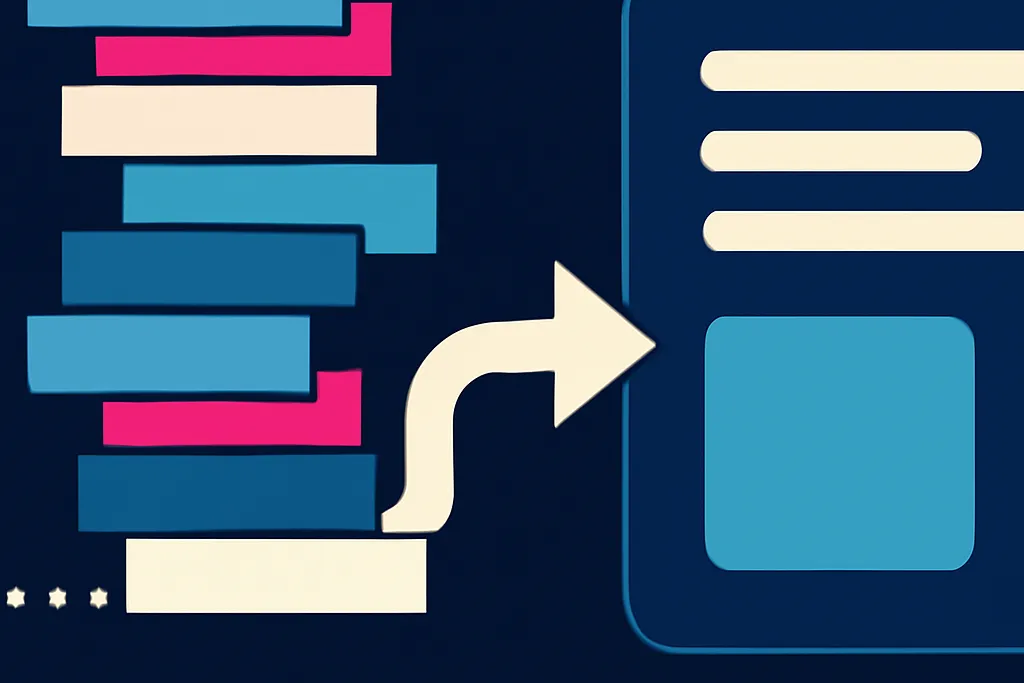
Event sourcing and CQRS trace their roots directly to the transaction-log approach formalized decades ago. Rather than treating state as a mutable record that is overwritten in place, these patterns treat every change as an immutable fact that is appended to a durable log. The current view of any entity is then derived by replaying or projecting that sequence of facts.
The transaction log as the original event store
Jim Gray’s Transaction Concept established the transaction log as the single source of truth for both recovery and consistency in database systems. Every committed change was written sequentially to the log before it was considered durable, allowing the engine to reconstruct state after a crash by replaying the log from the last checkpoint. This design already separated the act of recording history from the act of maintaining a queryable current state. Modern event sourcing simply elevates that same log from an auxiliary recovery mechanism to the primary data model.
The lineage is explicit. When a system records an event such as “InventoryReserved” instead of updating a row in place, it is following the same principle Gray described: the log is the authoritative record, and all other structures are derived. Contemporary distributed databases continue to rely on this foundation when they expose change streams or commit logs to applications.
What event sourcing actually stores, and why
An event-sourced system persists only the sequence of domain events that have occurred. Each event is a self-contained, immutable record that includes a timestamp, an aggregate identifier, a version, and a payload describing what happened. No current-state tables are updated as part of the write path; the only write operation is an append to the event log.
This choice eliminates the need to reverse-engineer history from the latest snapshot of mutable rows. Because every past state transition remains queryable, the system can answer questions such as “what was the state of order 4821 at 14:07 on 12 March 2025?” without additional audit tables. It also removes the possibility of inconsistent intermediate states that arise when a transaction updates several tables but fails partway through.
CQRS: splitting the write model from the read model
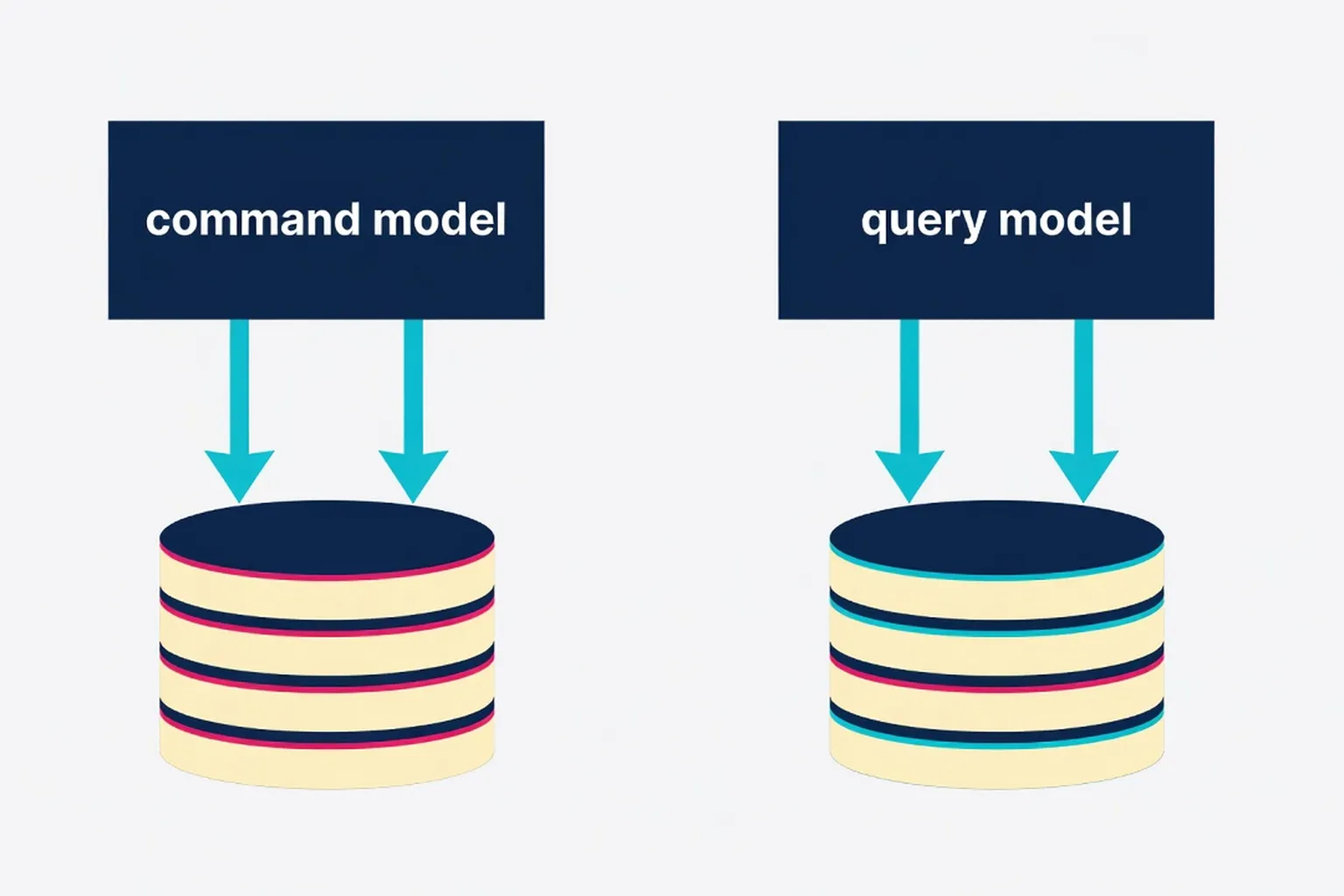
Command Query Responsibility Segregation (CQRS) formalizes the separation that event sourcing already implies. Commands are validated and executed against the write model, which produces new events. Separate read models are built by consuming those events and projecting them into whatever shape query workloads require—relational tables, materialized views, search indexes, or time-series stores.
The separation addresses the fundamental mismatch between write and read access patterns. A write model must enforce invariants and maintain causal order; a read model can be denormalized aggressively and rebuilt from scratch when requirements change. In practice this means the write side can remain normalized around aggregates while the read side can maintain dozens of specialized projections without touching the command path.
Ordering events correctly with Lamport clocks
Distributed event logs must preserve partial order even when wall-clock time cannot be trusted. Lamport clocks and causal ordering of distributed events provide a lightweight mechanism for establishing happened-before relationships without requiring synchronized physical clocks. Each node maintains a counter that is incremented on every local event and merged with the maximum value seen from messages received from other nodes.
When two events carry the same Lamport timestamp, a deterministic tie-breaker such as node identifier is applied. This produces a total order that respects causality while remaining computable at high throughput, an approach directly descended from work on ordering guarantees needed for a reliable event log. Systems that require stronger guarantees combine Lamport timestamps with vector clocks or hybrid logical clocks, but the core principle remains the same: the ordering guarantee is derived from the log itself rather than from external time sources.
Why CQRS read models are eventually consistent by design
Because read models are populated asynchronously by consuming the event log, they lag the write model by definition. This lag is not a bug; it is the direct consequence of the eventual consistency model CQRS read models rely on. Once an event is durably appended, the write side can acknowledge the command. Any number of read-model instances may then apply that event at their own pace.
The approach trades immediate consistency for horizontal scalability and fault tolerance. A read-model replica can fall behind during a network partition and catch up when connectivity returns without blocking writers. Applications that need stronger guarantees can still query the write model directly or use techniques such as request hedging and read-your-writes session tokens.
Event sourcing versus traditional CRUD trade-offs
The following table summarizes the principal engineering differences.
| Dimension | Event Sourcing + CQRS | Traditional CRUD |
|---|---|---|
| Write path | Append-only event log | In-place updates to normalized rows |
| Read path | Materialized projections rebuilt from events | Direct queries against mutable tables |
| History and audit | Native, complete | Requires separate audit tables or triggers |
| Schema evolution | Event versioning required | Column additions usually non-breaking |
| Replay cost | Linear in event count unless snapshots exist | Constant-time access to current state |
| Scaling reads | Independent read-model instances | Read replicas or caching layers |
A second comparison appears when teams evaluate operational characteristics.
| Operational Aspect | Event Sourcing + CQRS | Traditional CRUD |
|---|---|---|
| Storage growth | Strictly append-only, compaction possible | Updates and deletes create fragmentation |
| Debugging | Requires event replay tooling | Direct inspection of current rows |
| Testing | Event streams can be replayed deterministically | State setup often requires complex fixtures |
Snapshotting: solving the replay-time problem
Replaying an entire event history for every query quickly becomes impractical. Snapshotting captures the aggregate state at a chosen version so that subsequent queries start from the snapshot rather than from the first event. A typical implementation stores a serialized snapshot together with the version number of the last event it reflects. New events are applied only to that snapshot.
Most production systems generate snapshots on a schedule or when the distance between the last snapshot and the current log head exceeds a threshold—commonly 500 to 2000 events. Because snapshots are themselves derived artifacts, they can be regenerated from the event log at any time, preserving the immutability guarantee of the source of truth.
Common pitfalls: schema evolution and event versioning
Event schemas are part of the public contract between producers and consumers. Once an event type is published, its structure cannot be changed without breaking downstream projections. Teams therefore adopt explicit versioning strategies such as adding new event types for structural changes or embedding a version field that allows consumers to apply different deserialization logic.
A related challenge appears when events must carry forward-looking data. Adding an optional field is usually safe, but removing a field or changing its semantics requires a migration plan that includes dual-writing or a period of backward-compatible events. Coverage of software architecture patterns used in industrial systems shows that treating events as immutable API messages reduces the frequency of these migrations compared with mutable row schemas.
Common mistake: Treating the event log as a mutable queue and allowing producers to overwrite or delete past events destroys the audit trail and breaks every read model that has already consumed those events.
Case pattern: an order system modeled with event sourcing
Consider an order-management service. The write model accepts commands such as PlaceOrder, AddItem, and ConfirmShipment. Each command produces one or more events: OrderPlaced, OrderItemAdded, OrderConfirmed. These events are appended to a log partitioned by order identifier.
Read models consume the same stream. One projection maintains a relational table optimized for order-status queries. Another builds a search index for customer-facing lookups. A third feeds a dashboard that displays real-time fulfillment metrics. Because each projection is independent, the team can add a new analytics view without touching the command handlers or existing read models.
When the order aggregate reaches 1200 events, the system writes a snapshot containing the current line items, shipping address, and payment status. Subsequent replays begin from that snapshot, keeping query latency under 5 ms even for long-lived orders.
Where these patterns are heading with streaming infrastructure
The rise of durable, ordered log systems has lowered the operational cost of maintaining event-sourced architectures at scale. Kafka-style platforms now provide built-in compaction, exactly-once delivery semantics, and consumer-group coordination that previously required custom coordination services. Our companion piece on Kafka-style streaming infrastructure examines how these capabilities change deployment patterns for CQRS workloads.
At the same time, the industry continues to move away from monolithic read/write models, a shift documented directly in why monolithic read/write models no longer scale. The architectural constraints that once forced every query through a single normalized schema no longer apply when independent projections can be maintained from a shared event log. The combination of immutable event streams and separated read models therefore remains one of the most direct ways to achieve both correctness and elasticity in distributed systems.
Key takeaway: The event log is not merely a source of truth for recovery; when treated as the primary data model it also becomes the foundation for independent, scalable, and auditable read paths.
Implementation considerations for 2026 deployments
Production teams adopting event sourcing and CQRS in 2026 typically integrate with log-based platforms that offer native support for exactly-once semantics and tiered storage. Apache Kafka 4.1 (released March 2026) and Apache Pulsar 4.0 both expose compacted topics with configurable retention windows of 30–90 days for hot data and object storage offload for colder partitions. EventStoreDB 25.2, released January 2026, added built-in support for hybrid logical clocks and automatic snapshot compaction, reducing average replay latency from 180 ms to 12 ms on aggregates exceeding 50 000 events.
Teams also evaluate framework choices that enforce aggregate boundaries at compile time. Axon Framework 5.1 (Java) and NEventStore 3.4 (.NET) provide explicit aggregate lifecycles and snapshot hooks, while Marten 8.2 on PostgreSQL uses JSONB columns for event storage and built-in projection rebuilds triggered by schema changes. These libraries expose metrics such as events-per-second per aggregate and projection lag in milliseconds, which operators wire into Prometheus scrape endpoints.
- Command validation occurs inside an aggregate’s decide method before any event is appended.
- Event handlers must remain idempotent; duplicate deliveries are detected via a monotonically increasing version field.
- Read-model rebuilds are performed by replaying from a chosen snapshot version rather than from genesis.
- Consumer groups coordinate offset commits only after projection transactions commit, preserving exactly-once guarantees.
- Schema registries such as Confluent Schema Registry 8.1 enforce backward compatibility checks on every new event type before it reaches the broker.
Case pattern: payment processing pipeline
A European payments processor replaced its CRUD-based ledger with an event-sourced write model in Q3 2025. The aggregate “Payment” accepts commands InitiatePayment, Authorize, Capture, and Refund. Each command emits events carrying ISO 20022 fields plus an internal correlation identifier. Events are partitioned by payment identifier across 24 Kafka partitions, yielding 42 000 events per second at peak.
Three independent projections are maintained:
- A PostgreSQL table storing current authorization status for real-time API responses.
- An OpenSearch index supporting full-text search over merchant references and customer IBANs.
- A time-series store in TimescaleDB 2.19 that aggregates hourly capture volumes for regulatory reporting.
When a payment aggregate reaches 800 events, a snapshot containing the latest balances and authorization codes is written. Replays for a disputed transaction now complete in under 3 ms. The architecture survived a three-hour regional outage in Frankfurt in January 2026; read-model instances resumed from the last committed offset without data loss or manual reconciliation.
Operational metrics and monitoring practices
Production deployments track the following observables to detect divergence or capacity issues, the same discipline explored in our interview on chaos engineering for distributed databases:
- Event append latency at the 99th percentile (target < 4 ms).
- Projection lag measured in both event count and wall-clock time.
- Snapshot size distribution; files larger than 2 MB trigger compaction jobs.
- Replay throughput during blue-green projection upgrades (observed 180 000 events per second on 32 vCPU instances).
Key takeaway: Instrumentation must capture both the write-side append rate and the per-projection consumption rate; otherwise, silent lag can exceed acceptable freshness windows before operators notice.
Additional trade-off table
The table below compares storage engines commonly used as event stores in 2026.
| Engine | Max sustained append rate | Native snapshot support | Compaction strategy | Multi-region replication |
|---|---|---|---|---|
| EventStoreDB 25.2 | 180 k events/s | Yes | Background merge | Synchronous + async |
| Kafka 4.1 compacted | 1.2 M events/s | External | Log compaction + tiering | MirrorMaker 3 |
| PostgreSQL + Marten | 85 k events/s | Yes | VACUUM + JSONB rewrite | Logical replication |
| FoundationDB | 250 k events/s | No | Layer-managed | Synchronous |
Case pattern: IoT sensor stream aggregation
An industrial equipment vendor deployed an event-sourced CQRS layer for 1.4 million connected sensors in late 2025. Each sensor emits a TelemetryReceived event every 30 seconds. Events are routed through Pulsar topics partitioned by device serial number. The write model validates firmware version and geographic fencing rules before appending.
Two read models are generated:
- A materialized view in SingleStore that answers “last known state” queries for operator dashboards.
- A feature store updated every minute that feeds an anomaly-detection model retrained weekly.
Snapshots are created every 2000 events per device; the resulting 4 KB protobuf records are stored alongside the event log. During a firmware rollout that affected 180 000 devices, the system replayed only the last 48 hours of events per device, completing the migration in 11 minutes with zero downtime. Teams building similar telemetry pipelines can review engineering practices for connected-device backend infrastructure for related operational guidance.
FAQ
Q: What is event sourcing? A: Event sourcing stores every state change as an immutable event in an append-only log, rather than only storing the current state. The current state of any entity is derived by replaying the sequence of events that pertain to it, optionally starting from a snapshot to reduce replay time.
Q: What does CQRS stand for and what does it solve? A: CQRS stands for Command Query Responsibility Segregation. It separates the write model, which validates commands and appends events, from the read model, which maintains optimized projections for queries. Each side can then be scaled, evolved, and deployed independently.
Q: How does event sourcing relate to Jim Gray’s Transaction Concept paper? A: Gray’s paper formalized the transaction log as the source of truth for recovery and consistency. Event sourcing generalizes that same append-only log into the primary data model, not merely a recovery mechanism, so that every past state transition remains explicitly recorded and queryable.
Q: Is event sourcing the same as CDC? A: No. Change Data Capture extracts change events from an existing database’s internal log after the fact. Event sourcing makes the event log itself the primary, authoritative data store from the moment the first event is written.
Q: What are the downsides of event sourcing? A: Replaying long event histories can be slow without snapshotting. Schema evolution of events is harder than adding columns to mutable rows because published events form an immutable contract. Debugging also requires reasoning about a sequence of events rather than inspecting a single current-state row.